
Miami Bathroom / Permitting Guide
Do You Need a Permit to Remodel a Bathroom in Miami?
Which shower, tub, toilet, vanity, plumbing, electrical and tile projects require permits, and how the process works before demolition.
Yes, most complete bathroom remodeling projects in Miami require one or more permits, especially when the work changes plumbing, electrical wiring, ventilation, walls or the bathroom layout.
You may not need a building permit for limited cosmetic work such as painting, replacing accessories or installing a vanity in the same configuration without changing plumbing or electrical systems. However, permit requirements depend on the exact scope of work and the government agency responsible for your property. A City of Miami address, an unincorporated Miami-Dade property and a home in Miami Beach, Coral Gables or another municipality may follow different application procedures.
If your remodel involves a tub-to-shower conversion, relocated toilet, new plumbing, electrical changes, wall removal or new ventilation, plan on obtaining permits. Cosmetic improvements may be exempt, but confirm the exemption with the building department responsible for your address.
First, find the correct permitting authority
Miami is often used to describe the entire metropolitan area, but Miami-Dade County contains numerous incorporated municipalities with their own building departments. The correct permitting authority depends on the property's legal jurisdiction, not simply the city in the mailing address.
| Property location | Primary permit authority |
|---|---|
| Inside the City of Miami | City of Miami Building Department |
| Unincorporated Miami-Dade County | Miami-Dade County |
| Miami Beach, Coral Gables, Doral or another incorporated city | That municipality's building department |
| Condominium | City or county building department plus the condo association |
| Historic property or district | Building department plus any required historic review |
Miami-Dade explains that its permitting process applies to unincorporated properties with folio numbers beginning with 30, while incorporated cities have their own building officials. For properties inside the City of Miami, applications and plans are generally submitted through the City's electronic permitting and plan-review systems. Confirm jurisdiction using the property address or folio information before submitting an application.
Which bathroom projects require a permit in Miami?
The following table is a practical starting point. It is not a final determination, because the building official responsible for the property makes that decision.
| Bathroom project | Permit normally required? | Why |
|---|---|---|
| Tub-to-shower conversion | Yes | Usually changes the drain, valve, waterproofing or fixture configuration |
| Relocating a toilet | Yes | Requires drain, waste, vent or water-supply alterations |
| Moving a sink or vanity | Yes | Plumbing lines are relocated or reconfigured |
| Same-configuration vanity replacement | Often no building permit | May be exempt when plumbing, ventilation and electrical remain unchanged |
| Adding or relocating outlets | Yes | Electrical system is altered |
| Installing new recessed lighting | Usually yes | New wiring or electrical boxes are normally involved |
| Relocating an exhaust fan | Usually yes | May require electrical and mechanical work |
| Removing or moving a wall | Yes | Building review is required; structural plans may be needed |
| Replacing shower tile only | Depends | Surface work may be exempt, but rebuilding the shower or waterproofing can require a permit |
| Painting the bathroom | Generally no | Cosmetic surface treatment |
| Replacing mirrors and towel bars | Generally no | Does not alter a regulated building system |
| Reinstalling an existing toilet during a repair | May be exempt | Only when pipes, valves and fixtures are not replaced or rearranged |
| Complete bathroom renovation | Yes | Usually combines building, plumbing and electrical work |
Florida law generally requires a permit before a person constructs, alters, modifies or repairs a building unless a valid exemption applies, and the appropriate local enforcement agency administers the permit.
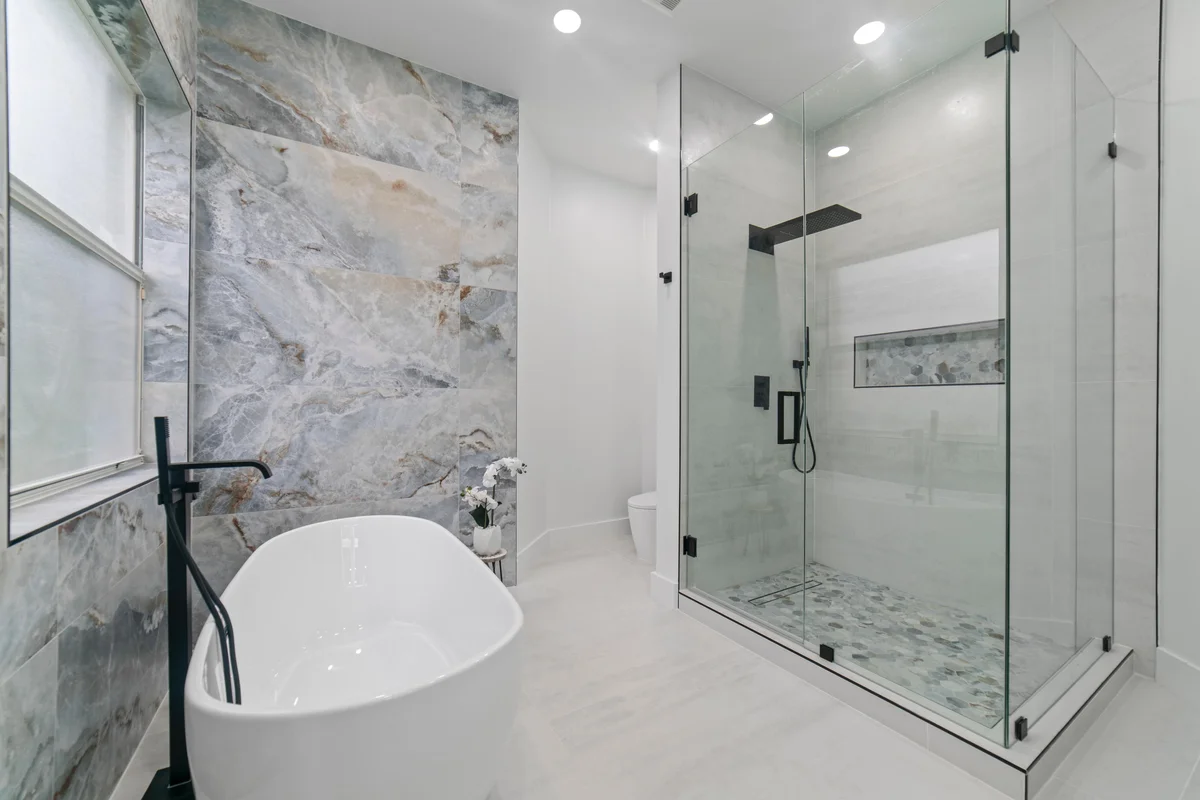
Do you need a permit for a tub-to-shower conversion?
A tub-to-shower conversion should normally be treated as permitted work. Even when the new shower occupies the bathtub's existing footprint, the project may involve changing or relocating the drain, modifying supply lines, installing a new shower valve, building a shower pan, installing a waterproofing system, changing the curb or floor, adding a shower light or exhaust fan, or modifying walls around the wet area.
Moving the drain is not the only issue: a shower has a different waterproofing and drainage assembly than a bathtub, and the work may need to remain visible until the applicable rough plumbing, building or waterproofing inspections are completed. Do not assume a prefabricated shower pan automatically eliminates the permit requirement. If you are still choosing fixtures, see our guide to freestanding vs built-in tubs and our walk-in shower conversion service.
Does replacing a bathroom vanity require a permit?
For an unincorporated Miami-Dade property, replacing a residential vanity in the same configuration is listed as work that is not regulated by the Florida Building Code. However, associated plumbing, ventilation or electrical work requires a permit when it is relocated, reconfigured or altered. A same-configuration replacement generally means the vanity stays in its existing location, the sink stays in approximately the same position, the drain and supply lines are not relocated, electrical outlets are not moved, and no wall or ventilation modifications are made. A permit is more likely when converting a single vanity to a double vanity, moving the sink to another wall or adding outlets. See our vanity installation service, and confirm the scope with the building department before ordering materials.
Do you need a permit to move a toilet?
Yes, relocating a toilet normally requires a plumbing permit. Moving a toilet can require changes to the waste line, venting and water supply. In a concrete-slab home, the project may also require cutting and repairing the slab, and in a condominium the drain or slab may be considered part of the building's common structural or plumbing system. Miami-Dade allows certain repairs and the removal and reinstallation of a water closet when the work does not replace or rearrange pipes, valves or fixtures; that limited repair exemption should not be confused with relocating a toilet. Before moving a toilet in a condo, obtain written approval from both the association and the applicable building department.
Does bathroom electrical work require a permit?
New or altered bathroom electrical work normally requires an electrical permit. Examples include adding or relocating receptacles, installing a new circuit, moving switches, adding recessed lighting, installing an illuminated mirror with new wiring, relocating an exhaust fan, adding under-vanity or shower lighting, installing electric floor heating, or changing wiring discovered during demolition. Bathrooms are wet locations with specific electrical-safety requirements affecting receptacle protection, circuit configuration, lighting placement and equipment near a tub or shower. Simply replacing a decorative light fixture on an existing approved connection may be treated differently from installing new wiring.
Does installing a bathroom exhaust fan require a permit?
It depends on what is being changed. Replacing an existing fan with a comparable unit without altering wiring or ductwork may qualify as limited repair work in some jurisdictions. A new or relocated fan may require electrical and mechanical permits because it can involve new wiring or a new circuit, new ductwork, a new exterior termination, changes to the ceiling, or penetration of a rated assembly in a condominium. The duct should not simply discharge moisture into an attic or ceiling cavity; the ventilation route should be evaluated during planning, particularly in a multi-unit building.
Do you need a permit to replace bathroom tile?
Surface-only tile replacement may not require a building permit in some circumstances, and Miami-Dade identifies certain floor resurfacing and interior surface treatments as exempt work. However, replacing bathroom tile can become permitted construction when the work includes demolishing a shower enclosure, rebuilding the shower pan, replacing the waterproofing membrane, moving a drain, cutting or repairing a concrete slab, altering walls or backing materials, changing plumbing fixtures or valves, or repairing significant water damage. Installing new floor tile over an intact substrate is not the same as demolishing and rebuilding a leaking shower, so a written scope should clearly identify whether the contractor is performing surface work only or reconstructing the wet-area assembly.
Does Florida's $7,500 permit exemption apply to bathroom remodeling?
A Florida law effective July 1, 2026, requires local governments, outside designated flood-hazard areas, to exempt qualifying work on single-family residential property valued at $7,500 or less. However, the exemption excludes electrical, plumbing, structural, mechanical and gas work, so it will not eliminate permits for most substantive bathroom remodeling projects.
Important limitations include:
- The work must qualify as single-family residential work
- Plumbing, electrical, structural, mechanical and gas work remains excluded
- The property cannot be in a qualifying flood-hazard area
- A larger project cannot be divided into smaller contracts to avoid permitting
- Homeowners must follow the applicable local procedure for claiming an exemption
- Condominium units should not be assumed to qualify as single-family property
For a bathroom remodel, the safest approach is to submit the complete scope to the responsible building department instead of relying on the project price alone.
What permits may be needed for a Miami bathroom remodel?
A full bathroom renovation may require several coordinated permit disciplines.
Building or master permit
- Overall renovation and layout changes
- Wall and shower construction
- Accessibility issues
- Subsidiary trade permits attach to it
Plumbing permit
- Relocating a toilet or moving a sink
- Changing tub or shower drains
- Installing a new shower valve
- Reconfiguring supply, drain or vent piping
- Adding a second sink; repairing concealed plumbing
Electrical permit
- New or relocated receptacles and switches
- Lighting and exhaust-fan wiring
- Dedicated circuits
- Heated-floor systems and hardwired mirrors
Mechanical & structural
- Mechanical review for bathroom ventilation and ductwork
- Signed, sealed drawings when structural walls, slabs or components are affected
- Complex projects may require a licensed architect or engineer
Bathroom permits for Miami condominiums
Condo bathroom remodeling usually involves two separate approval systems: the condominium association's renovation approval and the applicable city or county permits. Association approval does not replace a government permit, and a government permit does not replace association approval.
A Miami condo association may request:
- A contractor's license and certificate of insurance
- General liability and workers' compensation documentation
- A detailed scope of work
- Plumbing and electrical plans and product specifications
- Waterproofing information and construction schedules
- Worker and vehicle information, elevator-protection arrangements
- Refundable construction deposits and engineer or architect drawings
- Evidence of approved permits
Changing plumbing in a condo deserves special attention, because drain lines, supply risers, concrete slabs and waterproofed assemblies may affect neighboring units or common components. Obtain written authorization before demolition, and see our Miami condo renovation permit guide for the wider process.
What documents may be required?
Requirements vary with the project, but a bathroom permit package may include a completed permit application, property-owner information, contractor information and license details, existing and proposed floor plans, a plumbing layout, an electrical plan, a fixture schedule, product specifications, construction details, structural drawings when applicable, condo association approval, a Notice of Commencement when required, and signed and sealed professional plans for qualifying work.
The typical bathroom permit and inspection process
Confirm the property's jurisdiction
Determine whether the property is in the City of Miami, unincorporated Miami-Dade County or another municipality.
Define the complete scope
List every fixture, wall, outlet, light, drain and ventilation component that will change. Permit advice is only reliable with an accurate scope.
Prepare plans and association documents
Create the required drawings and secure condo or HOA approval when applicable.
Submit the permit application
Submit to the responsible city or county, then respond to plan-review comments and upload corrected documents.
Obtain the issued permit
Do not begin permitted work merely because an application was submitted. Wait until the permit is issued and association authorization is complete.
Complete demolition and rough work
The licensed trades complete approved plumbing, electrical and mechanical work.
Schedule required inspections
Inspectors may need to review work before walls, floors or ceilings are closed.
Complete finishes
After rough inspections pass, proceed with drywall, waterproofing, tile, cabinetry and fixtures in the approved sequence.
Request final inspections
Final inspections verify the completed work matches the approved documents and codes.
Close the permit
Keep the final inspection records and permit closure documentation with the property records.
Can a homeowner pull the bathroom remodeling permit?
Florida provides an owner-builder path in qualifying circumstances, but it carries significant responsibility; the owner may become responsible for supervision, code compliance, inspections, workers and other legal obligations. The City of Miami limits its owner-builder permits to eligible owner-occupied one-family and two-family residential properties, and an owner-builder permit should never be used to allow an unlicensed person to operate as the project's contractor. For multi-trade renovations, hiring an appropriately licensed contractor can simplify coordination, and homeowners can verify a Florida license through the state's official license-verification system.
What happens if you remodel a bathroom without a permit?
Beginning regulated work without a permit can create problems during construction and after the project is finished. Possible consequences include a stop-work order, code-enforcement action, additional or after-the-fact permit fees, opening finished walls or floors for inspection, correcting work that does not meet code, project delays, open violations or unclosed permits, complications during a property sale, and questions from an insurer or condominium association. An after-the-fact permit does not automatically approve existing work. If unpermitted work already exists, consult the applicable building department and a licensed contractor before covering, removing or modifying it.
A simple permit decision checklist
Assume your project requires professional permit review if you answer yes to any of these:
- Are you moving the toilet, sink, tub or shower?
- Are you converting a bathtub into a shower?
- Will concealed plumbing be replaced?
- Are you adding or relocating an outlet?
- Will new electrical wiring be installed?
- Are you adding or moving a ventilation fan?
- Will a wall be removed, moved or constructed?
- Will the concrete slab be cut?
- Is the shower pan or waterproofing system being rebuilt?
- Is the property a condominium?
- Could the work affect a common building system?
- Are structural components being changed?
For a cosmetic-only project, ask the permitting authority to confirm the exemption in writing whenever possible.
Frequently asked questions
Do you need a permit to remodel a bathroom in Miami?
Most complete bathroom remodels require permits because they involve plumbing, electrical, mechanical or building work. Cosmetic-only work may be exempt.
Do you need a permit for a tub-to-shower conversion in Miami?
Usually, yes. The conversion commonly changes the drain, shower valve, waterproofing assembly or fixture configuration.
Can I replace a bathroom vanity without a permit?
A vanity installed in the same configuration may be exempt in unincorporated Miami-Dade when plumbing, electrical and ventilation remain unchanged. Moving the sink or altering regulated systems can require permits.
Do I need a permit to replace bathroom flooring?
Surface-only flooring replacement may be exempt in some properties. Slab repairs, structural work, shower reconstruction or concealed plumbing changes can require permits.
Can I move a toilet during a bathroom remodel?
Yes, but relocating it normally requires a plumbing permit, and condo approval may also be required.
Does replacing a toilet require a permit?
Reinstalling an existing toilet without changing pipes, valves or fixtures may qualify for a limited repair exemption in unincorporated Miami-Dade. Confirm an exact fixture replacement with the building department.
Do I need a permit to replace shower tile?
Surface tile replacement may be treated differently from rebuilding a shower. If the project replaces the shower pan, waterproofing, drain, valve or backing system, expect permit review.
Does a bathroom remodel require an electrical permit?
An electrical permit is generally required when adding or relocating wiring, outlets, switches, lighting, circuits or exhaust-fan connections.
Does a condo association's approval replace a permit?
No. Association approval and government permits are separate requirements, and a condo renovation may require both.
Can my contractor start while the permit is being reviewed?
Work that requires a permit should not begin until the permit has been issued and any required association authorization is complete.
How can I check whether my bathroom contractor is licensed?
Search the company or license number using Florida's official license database, verify the status and confirm the license scope covers the proposed work.
Can I rely on the $7,500 Florida permit exemption?
Not for plumbing, electrical, structural, mechanical or gas work. Because most complete bathroom renovations involve at least one excluded trade, they usually remain subject to permitting.
Plan the permit before demolition
The best time to determine permit requirements is before the bathroom is demolished. MIA Remodeling Contractors provides bathroom remodeling throughout Miami-Dade and South Florida and, as a Florida Certified General Contractor, can help you evaluate the project scope, coordinate required trades and plan construction around applicable approvals and inspections.
Florida general-contractor license CGC1535875. Serving Miami-Dade, Broward and Palm Beach counties.