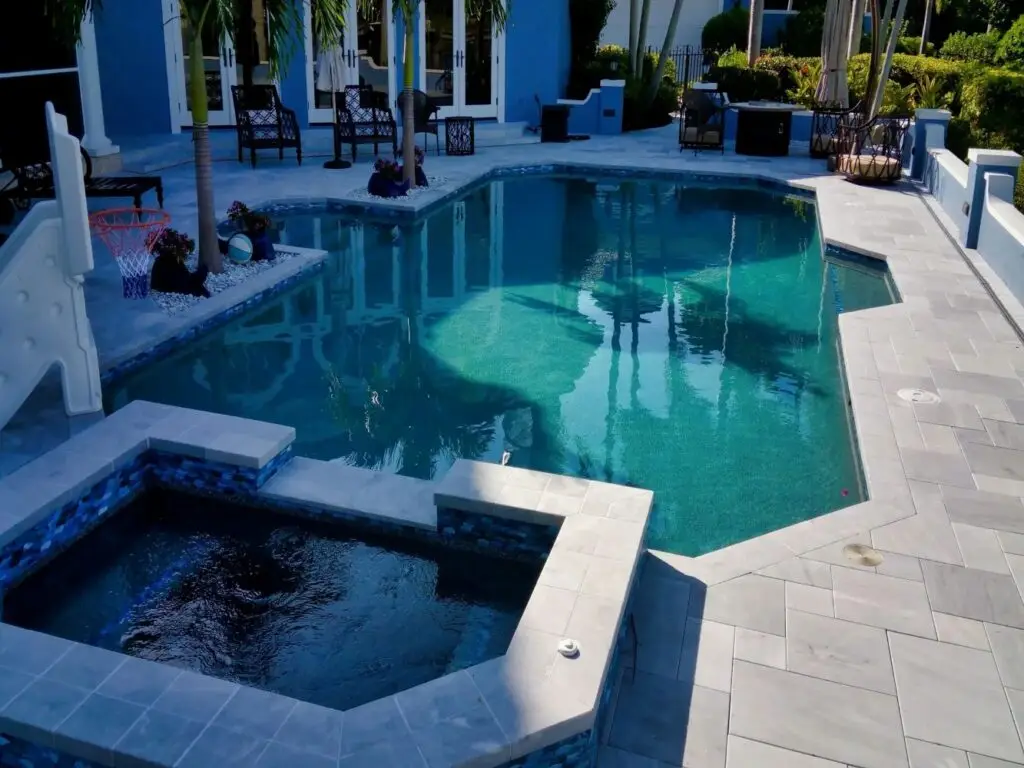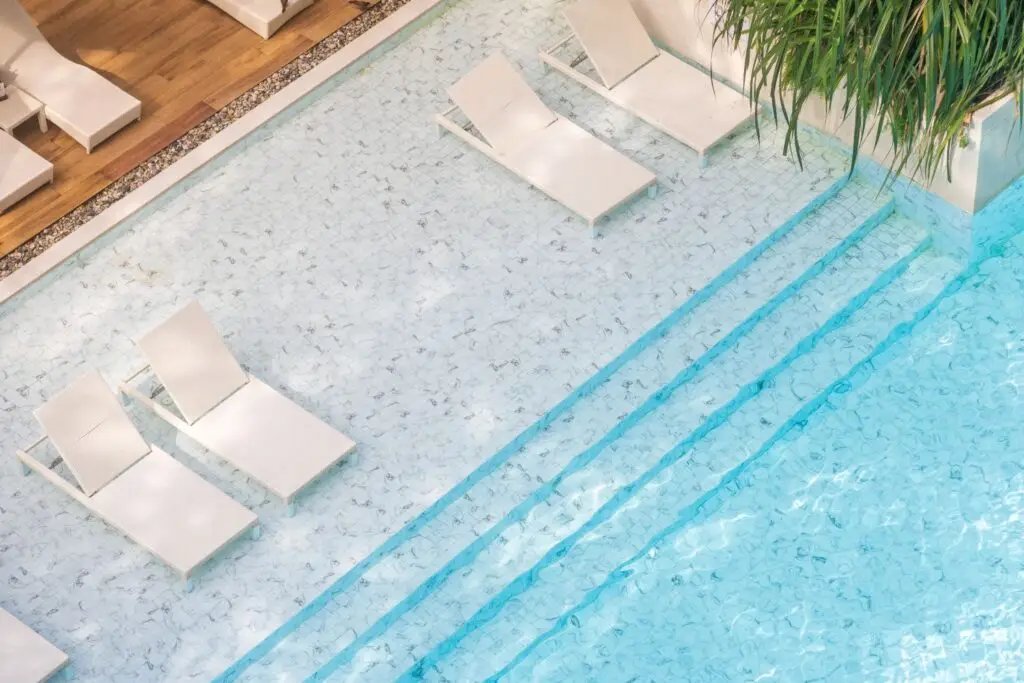
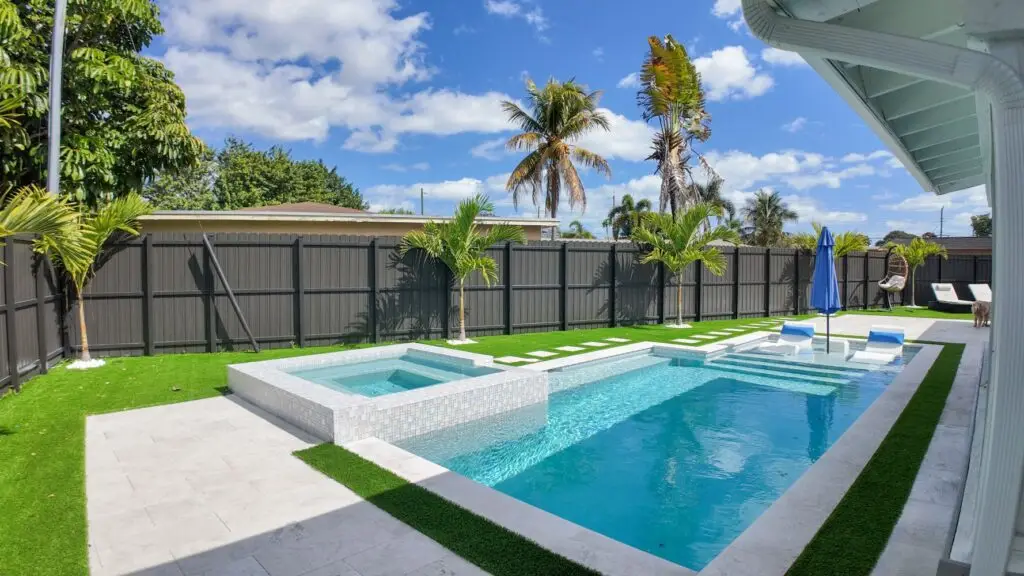
Saltwater pool resurfacing works best when you pick a finish that can handle salty water and you follow a simple care routine. The right surface can slow corrosion, reduce staining, and help your pool stay smooth, not sandy. For most saltwater pools, the strongest choices are long-life finishes like pebble finishes or high-quality polished finishes, paired with steady water balance and gentle cleaning.
Why saltwater pools can chew up the wrong surface
A saltwater pool is not the ocean, but it still runs on salt. A salt cell turns salt into chlorine. That process can raise the chance of wear in a few ways.
Saltwater can:
- Speed up metal rust when bonding, rails, or lights are exposed
- Make scaling show up faster if water balance drifts
- Add stress to weak plaster, so it gets rough and pitted
Think of your pool surface like a good pair of work boots. If the boots are thin and you drag them through sand every day, the soles wear down fast. A tougher sole lasts longer, even if you still need to brush off the grit.
Corrosion vs etching, they are not the same
People mix these up all the time, even smart folks who can rebuild a carburetor blindfolded.
- Corrosion is metal breaking down, rusting, or pitting. It hits ladders, handrails, light rings, screws, and sometimes heater parts.
- Etching is when the surface matrix breaks down and gets rough or spotty. It can look like dull patches, streaks, or a sandy feel.
Salt can play a part in both, but water balance and surface type matter even more.
The resurfacing finishes that hold up best in salty water
No finish is magic. Yet some finishes take saltwater better and stay good-looking longer with normal care.
Pebble finishes, tough like a gravel road, but nicer
Pebble finishes use small stones held in a cement base. They are popular for saltwater pools because they can resist wear better than plain plaster.
Why people like them:
- Good durability under normal chemistry
- Less likely to show small stains right away
- Texture hides minor aging
Trade-offs:
- Can feel rough if not installed and finished well
- Needs steady brushing early on after install
If you want a surface that can take a beating like a pickup truck tailgate, pebble is often the closest match.
Pool Resurfacing planning can also include coordinating related updates like tile and deck transitions.
Polished finishes, smoother feel, less “sandpaper”
A polished pool finish is finished to a smoother surface. The smoother the finish, the fewer tiny spots for scale and algae to grab.
Good points:
- Smooth feel on feet and knees
- Easier to brush and keep clean
- Can slow down staining when water is kept balanced
Trade-offs:
- Needs skilled install, prep work matters a lot
- Can still etch if water gets aggressive
A neighbor once joked, “I want my pool to feel like a hotel, not a driveway.” Polished finishes can get you closer to that hotel feel.
High-performance plaster blends, better than old-school plaster
Basic white plaster is common, but it can wear faster in saltwater if chemistry swings. Newer plaster blends often use improved materials that can hold up better.
Good points:
- Smooth and classic look
- Often lower texture than pebble
- Can work well when water balance is steady
Trade-offs:
- More sensitive to poor water balance than pebble
- Can show mottling or spotting if start-up care is sloppy
If you like the clean look of plaster, pick a proven blend and treat water care like oil changes. Skip them and the engine complains.
Tile and coping notes, because the surface is not the only player
Resurfacing is not just the pool shell finish. Saltwater can also beat up the waterline area.
Helpful upgrades during resurfacing:
- Waterline tile that resists staining
- Good grout choices and proper sealing where needed
- Coping materials that handle salt splash and sun
Salt splash at the waterline is like a “ring around the bathtub” problem, only bigger and more stubborn.
Materials and details that reduce corrosion around the pool
Even if your pool finish is strong, metal parts can still take damage. A resurfacing project is a good time to check these items.
Look at:
- Handrails and ladders, check for pitting and rust spots
- Light niches and trim rings
- Bonding and grounding connections, done by a qualified pro
- Screws and anchors at rails and covers
Safety note: Electrical bonding and grounding is not a weekend DIY project. If something looks off, get a licensed pro involved.
For background on bonding/grounding terminology and concepts, see Electrical bonding (Wikipedia).
How Miami Beach weather changes the game
Miami Beach weather can be rough on pools. Heat, humidity, and heavy rain can push pool water out of balance faster.
What weather does:
- Heat speeds up chemical reactions, so scale and staining can show faster.
- Big rain can dilute the pool and swing pH and alkalinity.
- Humidity and warm temps can help algae grow if sanitizer drops.
- Sun burns off chlorine faster, even with a salt system.
If your pool sits near Collins Avenue or close to the Intracoastal, salty air can also speed up rust on nearby metal parts. Even if your pool water is perfect, the air can still be a troublemaker.
What we usually see in Miami Beach, FL
Across Miami Beach, we often run into a few repeat issues, especially around older condos, rooftop pools, and backyards tucked behind small lots near Alton Road.
Common patterns:
- Rough steps and benches from surface wear and start-up mistakes
- Waterline scale that builds up fast from sun and splash-out
- Rust spots near rails or light rings from metal parts aging
- Small cracks that let staining set in if ignored
These are fixable, but they are easier to prevent than to chase later.
How to pick the right finish for your saltwater pool
Pick based on how you use the pool, how much texture you can stand, and how steady you will be with care.
Ask yourself:
- Do kids use the steps a lot and scrape toes? Go smoother.
- Do you want the longest life and can handle some texture? Pebble can fit.
- Do you want a classic smooth look and will keep chemistry steady? A quality plaster blend can work.
Also consider your deck and coping. A great pool finish next to failing coping is like putting new tires on a truck with bad brakes.
If you’re planning related upgrades around the pool area, explore options like Pool Deck Remodeling.
Resurfacing prep that matters more than people think
A strong finish can still fail if the base is weak. Prep is not glamorous, but it is the foundation.
Key prep steps that affect life:
- Remove loose or hollow spots
- Repair cracks the right way, not just a patch smear
- Prep the shell for proper bonding
- Keep proper cure timing and start-up steps
If you ever heard a guy say, “I can slap that on in a day,” that is your cue to ask more questions.
Quick troubleshooting steps that save your surface
Use these simple checks when something looks off.
- If the surface feels rough and you see white crust, then check calcium level and pH, then brush more often.
- If you see rust-colored spots near rails, then inspect metal parts and anchors, and keep metal out of the water when possible.
- If the finish looks dull or chalky, then test water balance, look for low pH or low alkalinity, and avoid harsh acid washing.
- If you see dark stains that do not brush off, then test for metals and review salt cell run time and filtration.
- If the pool burns eyes or smells strong, then check combined chlorine and circulation, and clean the filter.
Safety note: Do not mix chemicals on the deck. Add chemicals one at a time, and store them dry.
A few common myths, and what is true instead
- Myth: Saltwater pools have no chlorine.
Fact: They make chlorine, just in a different way. - Myth: More salt means cleaner water.
Fact: Too much salt can stress equipment and does not fix poor balance. - Myth: If the pool is clear, the surface is safe.
Fact: Water can look clear and still etch plaster if pH and alkalinity drift. - Myth: Acid washing fixes everything.
Fact: Acid washing can remove surface material, so it can shorten surface life if overused.
Maintenance routines that slow etching and staining
Saltwater pools like steady habits. Wild swings are what cause trouble. Think “slow and steady,” not “panic and dump chemicals.”
Weekly plan, keep it simple
- Test pH and chlorine level, adjust in small steps
- Brush walls and steps, focus on corners and benches
- Empty baskets and check water level
- Quick look at the salt cell area for scale signs
A little brushing each week is like flossing. Nobody loves it, but it saves pain later.
Monthly plan, stop problems before they get comfy
- Test total alkalinity and calcium hardness
- Inspect waterline tile and clean mild buildup early
- Check the filter pressure, clean or service as needed
- Look at rails, ladders, and screws for early rust spots
Yearly plan, keep the system honest
- Full equipment check, including salt cell cleaning if scale forms
- Inspect the pool surface for rough patches, spots, and small cracks
- Review pump run time and circulation, dead spots cause stains
- Check caulking at tile lines and joints if present
If you travel a lot, set up a pool service or a trusted friend plan. Salt systems are not “set it and forget it.” They are more like a grill smoker, you still check it.
Salt cell and chemistry tips that protect your new finish
Your salt cell is a workhorse. Treat it right.
Helpful habits:
- Keep pH from drifting high, high pH can push scale
- Do not over-clean the salt cell with harsh methods
- Run the pump enough for good mixing and skimming
- Keep water balanced during heat waves and after big rain storms
If your pool gets hammered by summer rain, test after storms. Rain can push balance around fast, like a toddler with a remote control.
For consumer guidance on pool chemical safety, see CDC: Pool Chemical Safety.
When resurfacing is the right move
A few signs point to resurfacing, not just cleaning.
Look for:
- Widespread roughness that brushing cannot fix
- Peeling, flaking, or areas that feel like wet sand
- Stains that return fast even after proper treatment
- Many patch spots that keep growing
If the surface is far gone, no chemical plan will turn it new again. That is like trying to wax a car with peeling paint.
To discuss timelines and options, you can use Contact Us.
FAQs
What is the best saltwater pool resurfacing finish to prevent corrosion?
Pebble finishes and well-installed polished finishes tend to hold up well. Corrosion is mostly a metal issue, so pair the finish choice with good metal part checks and proper bonding.
Does saltwater ruin pool plaster faster?
It can if water balance swings a lot. Steady pH, alkalinity, and calcium help slow etching and roughness.
How do I know if my pool is etching or scaling?
Etching often looks like dull, rough, or spotty areas that feel worn. Scaling is usually a raised white crust you can sometimes scrape or dissolve with proper treatment.
Can I use the same brushes and cleaners on a new finish?
Use a brush type that matches the finish. Many finishes do best with regular brushing, especially after resurfacing. Avoid harsh tools that scratch.
How often should I test my saltwater pool water in Miami Beach?
Weekly is a good baseline. Test more often during heat waves, heavy rain weeks, or when you host a lot of swimmers.
Is it safe to acid wash a saltwater pool finish?
It can be done, but it removes surface material. Overuse can shorten surface life. A pro should judge if it is needed and how strong the treatment should be.
Why do I get rust spots if I have a new surface?
Rust spots often come from metal parts, anchors, or screws, not the pool finish itself. Salt and salty air can speed up that rust if metal is exposed.
Should I drain my pool to fix surface problems?
Draining can be risky in South Florida because groundwater can affect pool shells. Talk with a pro before draining, especially after heavy rain.
Ready to upgrade your saltwater pool surface and cut down on corrosion headaches? Mia Remodeling Contractors helps homeowners and property managers in Miami Beach, FL choose the right resurfacing finish, fix worn surfaces, and set up smart maintenance habits so your pool stays smooth and strong. Call (954) 355-1520 or visit https://miaremodelingcontractors.com/ to schedule a consultation.