
Outdoor Living / Comparison Guide
Pergola vs Gazebo: Which One Belongs in Your Miami Backyard?
Compare shade, rain protection, materials, permits and cost to choose the right structure for your Miami backyard.
A shaded backyard can change how often you spend time outdoors. But when you start comparing a pergola vs gazebo, appearance is only part of the decision. You also need to consider rain protection, maintenance, installation costs and how the structure will perform in Miami’s weather.
A traditional pergola provides filtered shade through an open framework. A gazebo has a permanent roof. A louvered pergola offers adjustable overhead coverage, allowing you to open the roof for light or close it for shade and rain protection.
The right choice depends on how you want to use the space. Here’s how the three options compare, and what to consider before building in your Miami backyard.
Pergola vs Gazebo: What’s the Difference?
The main difference is the roof. A traditional pergola has open beams or slats, while a gazebo has a solid roof. A louvered pergola uses adjustable blades that change the amount of overhead coverage.
| Feature | Traditional Pergola | Gazebo | Louvered Pergola |
|---|---|---|---|
| Roof design | Open beams or fixed slats | Permanent solid roof | Adjustable roof blades |
| Shade | Filtered shade | Consistent overhead shade | Adjustable shade |
| Rain protection | Little without an additional cover | Overhead coverage, with exposure through open sides | Available when closed, depending on the system |
| Placement | Attached or freestanding | Usually freestanding | Attached or freestanding |
| Appearance | Modern, traditional or rustic | Traditional or contemporary | Typically modern |
| Maintenance | Depends on the material | Depends on the roof and frame | Frame, drainage and moving-component maintenance |
| Best use | Garden features and casual seating | A separate covered destination | Patios used throughout the day |
Choose an open pergola for filtered shade, a gazebo for permanent roof coverage or a louvered pergola for flexibility.
For permanent coverage directly outside the house, a covered patio is another option worth considering.
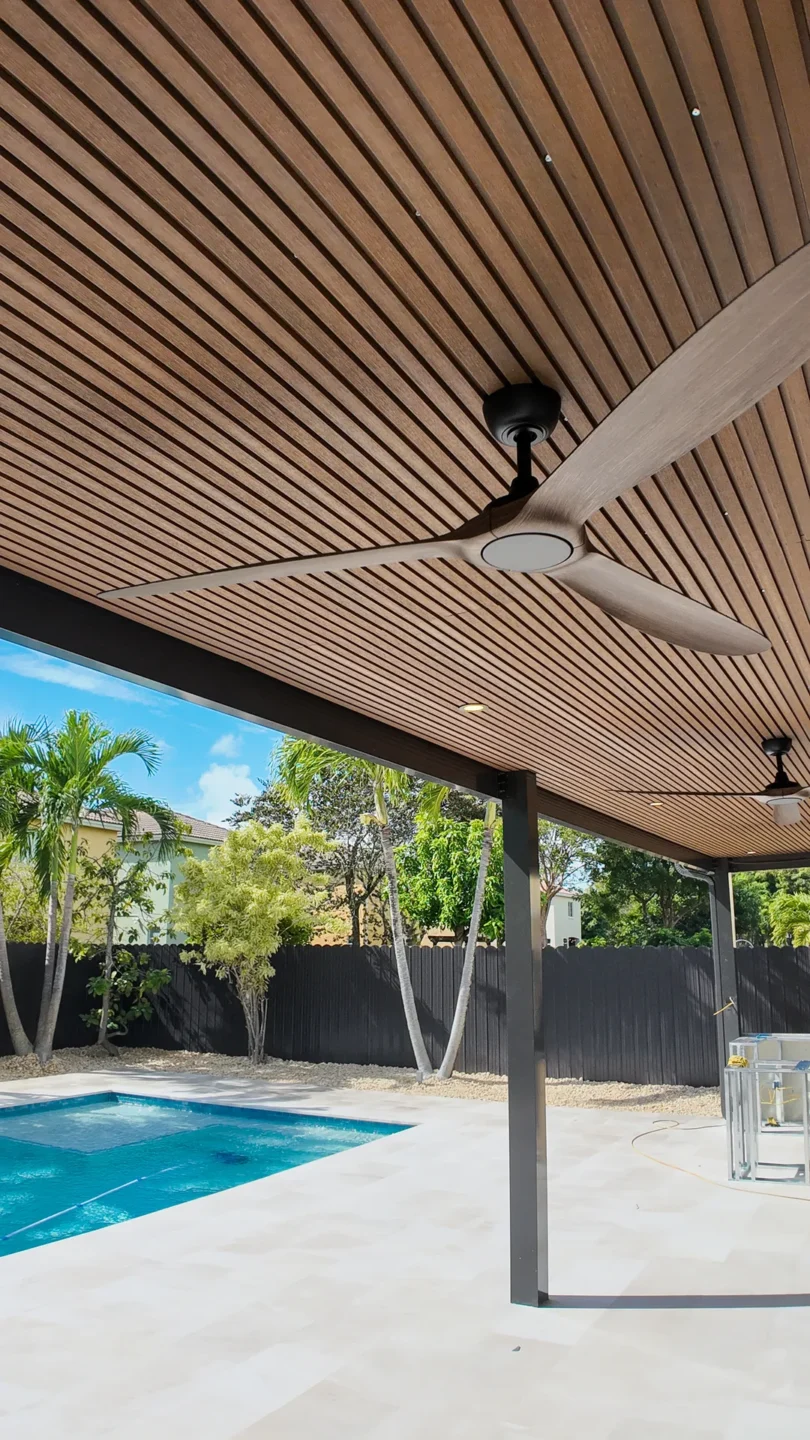
When a Traditional Pergola Makes Sense
A pergola defines an outdoor area without making it feel enclosed. It can frame a dining table, create a garden walkway or provide partial shade beside a pool.
The open roof allows sunlight through, so the amount of shade changes throughout the day. Slat spacing, direction and height all affect how comfortable the area feels.
That makes placement important. A pergola designed for morning coffee may need a different arrangement from one intended for afternoon entertaining.
A traditional pergola is a good fit when:
- You want filtered sunlight rather than complete overhead coverage.
- The space is mainly used in the morning or evening.
- You prefer an open view above the patio.
- Rain protection is not the main priority.
- You want a simpler structure with fewer moving parts.
If your main goal is keeping a dining table dry, an open pergola alone is unlikely to meet that need.
When a Gazebo Makes Sense
A gazebo creates a roofed destination within the yard. It often works well away from the house, where it can provide a separate place to eat, read or relax.
Gazebos can be square, rectangular or multi-sided. Although traditional designs are familiar, contemporary versions can suit modern homes.
The fixed roof provides consistent overhead shade and rain coverage without needing adjustment. Open sides still allow breezes through, although they also leave the interior exposed to sideways rain.
A gazebo is worth considering when:
- You want a permanent roof over a seating area.
- You prefer a freestanding structure.
- The backyard has room for a separate gathering spot.
- You do not need to open the roof for additional sunlight.
- You want a strong architectural feature in the landscape.
Comfort depends on the overall design. Roof height, ventilation, surrounding buildings and side panels matter more than the label “gazebo.”
When a Louvered Pergola Makes Sense
A louvered pergola gives you more control over the space beneath it.
The adjustable blades can open to bring in daylight, tilt to manage shade or close to provide overhead coverage. Systems designed for rain protection direct water into gutters and drainage channels.
This flexibility is useful when you use the same patio throughout the day. You can enjoy more light in the morning and increase shade as the afternoon warms up.
However, not every louvered system performs the same way. Before choosing one, ask about:
- Rain-management capacity.
- Drainage outlets and gutter maintenance.
- Manual or motorized operation.
- Power-loss procedures.
- Wind limitations and storm preparation.
- Warranty coverage for the frame, finish and motor.
A louvered pergola can make a patio more versatile, but it should not be treated as a fully enclosed, weatherproof room.
Which Option Provides Better Shade?
Start by checking where the sun falls during the hours you spend outside.
Low afternoon sunlight can enter beneath the edge of any roof. Even a solid gazebo roof may need additional shading on one side to protect a dining table or seating area.
Traditional pergola: partial coverage
An open pergola creates filtered shade. Closer slats can increase coverage, but their orientation needs to work with the sun’s path.
This is a practical choice when you want a balance of brightness and shade rather than a consistently covered space.
Gazebo: dependable overhead shade
A gazebo blocks direct sunlight from above. It works well when you want the same area shaded throughout the day.
Consider roof height and ventilation, especially if you plan to add side panels.
Louvered pergola: adjustable coverage
A louvered roof lets you change the balance of sunlight, shade and ventilation. That control is useful when weather conditions and activities change.
For any structure, a properly selected outdoor ceiling fan can improve comfort. Plan its mounting and electrical supply before construction begins.
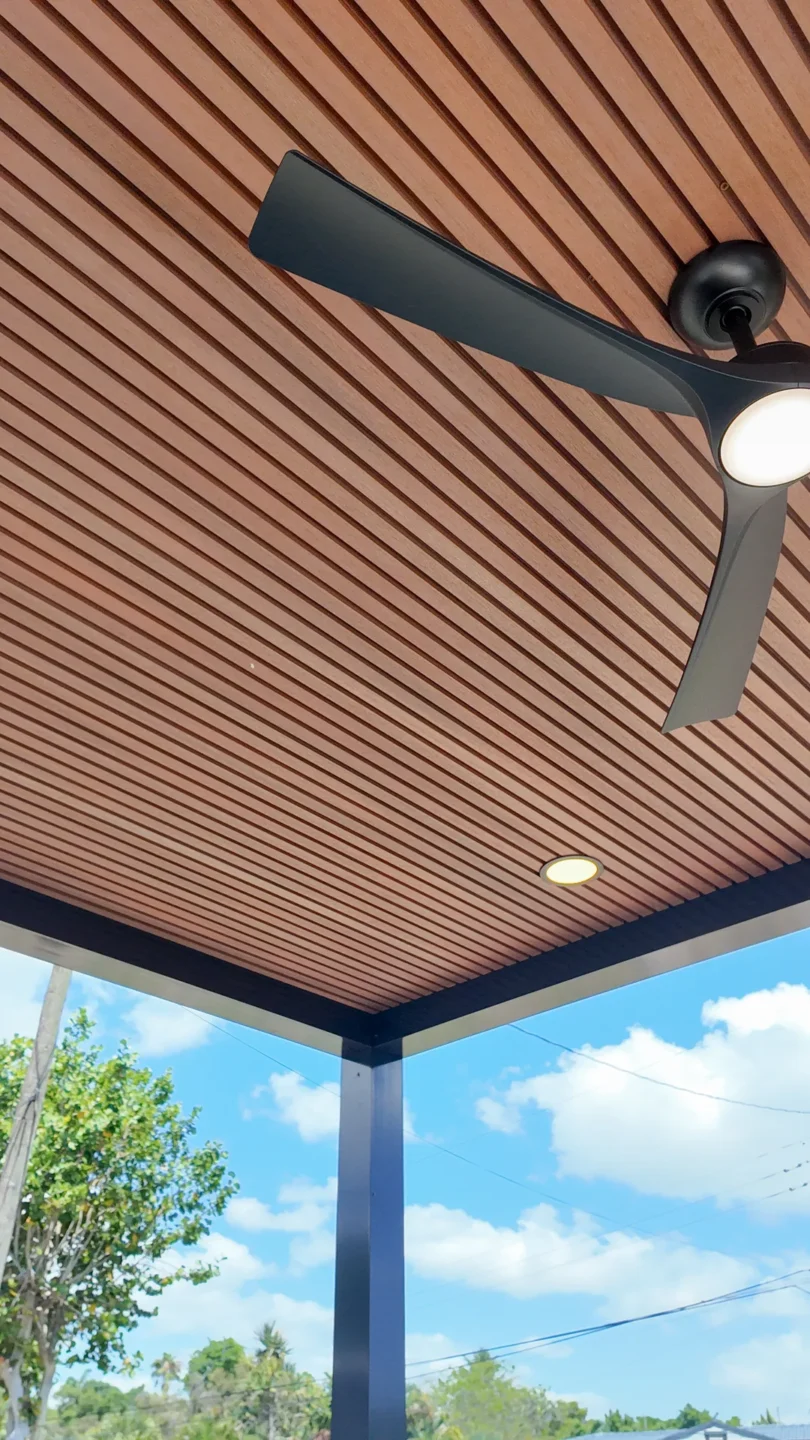
Rain Protection: What Should You Expect?
An open pergola does not provide reliable rain protection. Adding roof panels or a canopy changes the structure’s performance and may affect its design and permit requirements.
A gazebo provides permanent overhead coverage. A suitable louvered roof can also manage overhead rain when closed, provided it is installed and maintained correctly.
Neither option prevents all rain from entering through open sides.
Plan where the water goes
Roof drainage needs to work with the patio beneath it. Water should not discharge beside a doorway, seating area or frequently used walking route.
Ask the installer to show where gutters and outlets will be located. For systems with concealed drainage, confirm how leaves and debris will be removed.
Choose screens for the right purpose
Insect screens, solar shades and weather screens solve different problems.
An insect screen helps reduce bugs. A solar shade controls glare and sunlight. A weather screen may offer additional protection from wind-driven rain, depending on its design.
If mosquitoes are your main concern, compare a screen enclosure with adding screens around a smaller structure.
Remember that overhead rain coverage is not lightning protection. Move into a substantial enclosed building when thunderstorms approach.
Aluminum Pergola vs Wood: Which Is Better for Miami?
Both materials can work well. The better choice depends on the appearance you prefer and the maintenance you are willing to handle.
Aluminum pergolas
Aluminum offers clean lines and avoids wood-specific problems such as rot and termite damage. Powder-coated finishes provide a consistent appearance in a range of colors.
Aluminum still needs maintenance. Cleaning, coating inspections and hardware checks are important, particularly near the coast.
Ask about salt-exposure requirements, compatible fasteners and the manufacturer’s recommended care routine.
Wood pergolas
Wood provides natural grain and warmth. It can complement tropical planting, traditional architecture and garden settings.
Maintenance depends on the species, finish and exposure. Cleaning, inspections and periodic refinishing may be needed to preserve the appearance you want.
Ask to see an older installation, not only a newly completed project. That helps you understand how the material will age.
| Consideration | Aluminum | Wood |
|---|---|---|
| Appearance | Consistent finish and clean lines | Natural grain and variation |
| Rot and termite concerns | Not susceptible to wood rot or termite feeding | Resistance varies by species and treatment |
| Routine care | Cleaning, coating checks and hardware inspection | Cleaning, inspections and finish maintenance |
| Coastal exposure | Coating and compatible hardware matter | Material, finish and hardware matter |
| Best fit | Modern designs and manageable upkeep | Natural styling and owners comfortable with ongoing care |
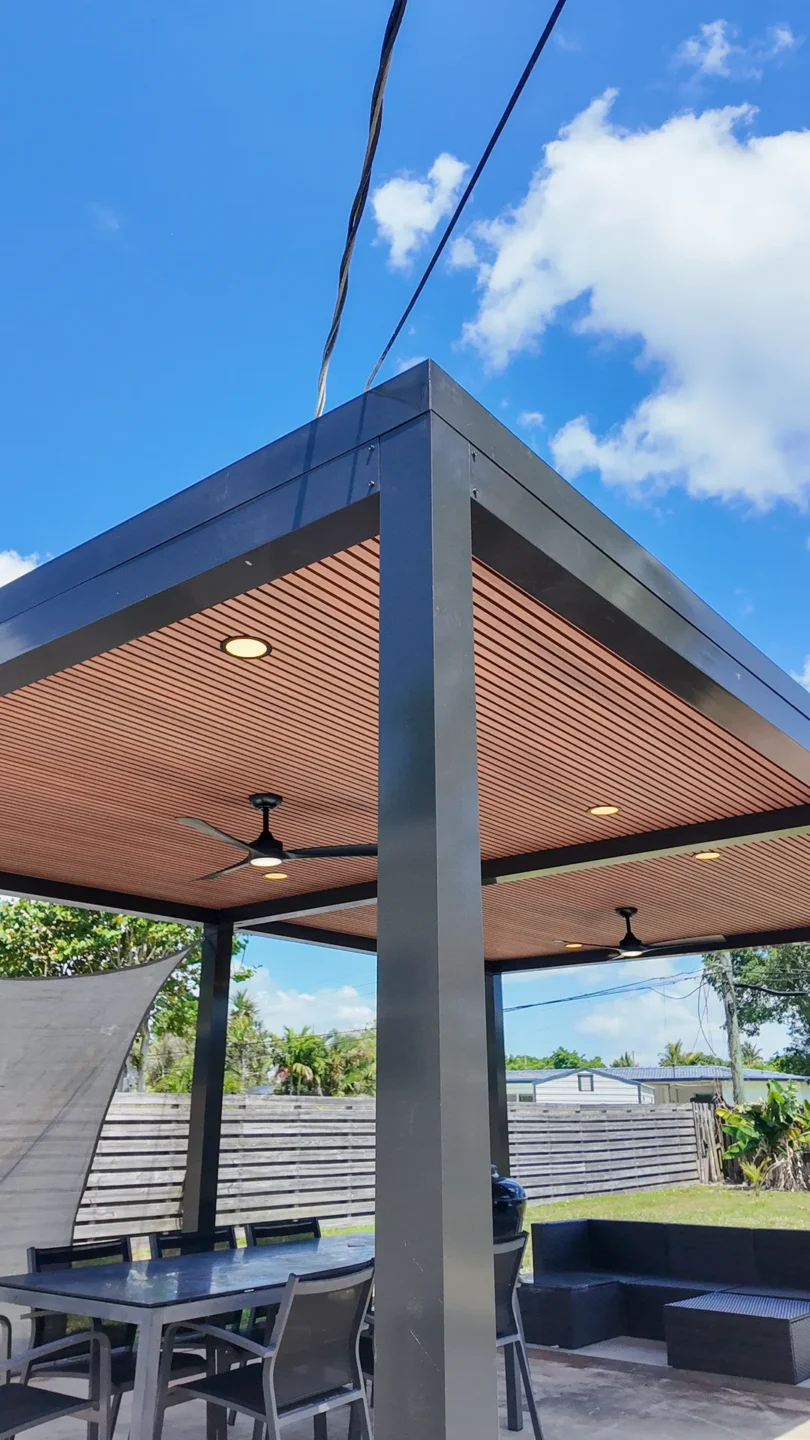
Hurricanes and Wind: What Matters Before You Build?
A pergola or gazebo needs to be evaluated as a complete structure. The roof, posts, connections, anchors and foundation all contribute to its performance.
A product’s advertised wind rating does not automatically establish that every size or installation is suitable for your property.
Ask your contractor how the proposed structure will meet the applicable requirements for your location. The design should account for its dimensions, height, exposure, roof configuration and any screens or accessories.
The foundation also matters. Do not assume an existing patio slab can support the installation without assessment. Pavers and decorative finishes do not replace a properly designed foundation.
For louvered systems, obtain written storm-preparation instructions for the exact model. Do not assume the blades should always be open or always closed during high winds.
No outdoor structure is hurricane-proof. Proper design, installation and maintenance are essential, along with following the manufacturer’s operating instructions.
Do You Need a Permit for a Pergola in Miami?
Do not assume an open pergola is automatically permit-free.
For unincorporated Miami-Dade, the county lists certain non-roofed, non-wind-resistant pergolas and trellises among building-permit exemptions. The listed category is subject to a $5,000 aggregate limit over 12 months, and the pergola item still requires a Zoning Improvement Permit.
You can review the conditions on the county’s >permit exemptions page.
Roofed gazebos, attached structures and louvered systems need review based on their actual design. The newer small-project exemption process also excludes structural work, so price alone does not establish eligibility.
Confirm requirements with the building department serving your address before ordering materials. HOA approval, where applicable, is separate from government approval.
How Much Does a Pergola Cost in Miami?
The following MIA planning ranges offer a starting point. Final pricing depends on the structure, site conditions and included work.
| Project | Approximate Size | Planning Range |
|---|---|---|
| Basic wood or aluminum pergola | 12 × 12 to 12 × 16 feet | $5,000 to $12,000 |
| Wood pergola | 12 × 16 feet | $6,000 to $12,000 |
| Aluminum pergola | 12 × 16 feet | $8,000 to $15,000 |
| Louvered aluminum pergola | 12 × 16 feet | $12,000 to $20,000 |
| Premium aluminum pergola with selected features | 12 × 16 to 16 × 20 feet | $12,000 to $25,000 |
These are budgeting ranges rather than fixed quotes. Ask whether the proposal includes foundations, engineering, permits, electrical work, drainage and accessories.
Gazebos require a separate estimate based on their dimensions, roof, materials and foundation.
What changes the price?
Larger spans, custom finishes, additional footings, motorization, screens, lighting and fans can increase the total.
A 20 × 20-foot pergola also needs its own design and quote. Its structural requirements may differ from a smaller model, so multiplying a smaller pergola’s price by area can be misleading.
Compare complete installed proposals. A kit-only price is not equivalent to a project that includes design, foundations and construction.
Which Structure Fits Your Backyard?
For a poolside lounge
A pergola can define a shaded seating area while keeping the pool surroundings open.
A louvered roof provides more control over sunlight, but post locations and drainage need to preserve comfortable walking routes. Coordinate the structure with any planned pool deck resurfacing.
For an outdoor kitchen
Overhead coverage can make cooking and dining areas more useful, but appliance clearances and ventilation must guide the design.
A grill cannot automatically be placed beneath any pergola or gazebo. Follow the appliance manufacturer’s requirements for overhead clearance, combustible materials and ventilation.
Plan the structure together with the outdoor kitchen so the roof, appliances and seating work together.
For a garden retreat
An open pergola works well when you want filtered shade and a visual connection to the surrounding landscape.
A gazebo creates a more distinct destination with permanent coverage.
For a small patio
Start with the furniture layout and walking space. A structure can fit within the yard yet feel crowded if posts interfere with movement.
Compare attached and freestanding options, and consider how the roof will affect daylight entering the home.
Frequently asked questions
Is a pergola cheaper than a gazebo?
A basic open pergola often costs less than a similarly sized custom gazebo because its roof is simpler. However, a motorized louvered pergola may cost more than a basic gazebo. Compare equivalent dimensions, materials, foundations and installation scopes.
Is a louvered pergola worth it in Miami?
It can be a good investment in comfort if you use your patio regularly and want adjustable shade and overhead coverage. If you mainly want a garden feature or occasional evening shade, a simpler pergola may meet your needs at a lower cost.
Will a louvered pergola keep furniture dry?
A suitable system can manage overhead rain when closed, but wind-driven rain may still enter through the sides. Installation, drainage and maintenance also affect performance. Use outdoor-rated furniture and ask about the roof system’s documented limitations.
Can you attach a pergola to a house?
Yes, when the design and existing structure support it. The connection, water management and applicable permit requirements need to be addressed. An attached pergola should be planned around the home’s construction rather than treated as a freestanding kit with one side removed.
How long does a pergola installation take?
The complete schedule includes design, approvals, material lead times, foundations, assembly and any electrical work. Ask for a project-specific timeline that separates these stages. On-site assembly is only part of the total project duration.
What is the difference between a pergola and a pavilion?
A traditional pergola has an open overhead framework. A pavilion generally has a solid roof with open sides. Product names vary, so compare the actual roof, structure and performance rather than relying only on the label.
Choose the Right Structure for Your Miami Backyard
Start with how you want to use the space.
For filtered shade and an open garden feature, consider a traditional pergola. For a separate seating area with a permanent roof, compare gazebo designs. For adjustable light and overhead coverage, explore a louvered pergola.
MIA Remodeling Contractors can help you evaluate the layout, materials and features that fit your backyard. Speak with our pergola builders in Miami or explore our outdoor living services in Miami to plan a space around your home and daily routine.
Plan the right shade structure for your backyard
MIA Remodeling Contractors designs and builds pergolas and outdoor living spaces, including permits, across Miami-Dade, Broward and Palm Beach counties.
Florida general-contractor license CGC1535875. Serving Miami-Dade, Broward and Palm Beach counties.