
Bathroom Remodeling / Shower Walls
Shower Tile vs Wall Panels: Cost and Maintenance Comparison
Compare installed cost, waterproofing, maintenance, design, repairs and resale value before you choose your shower walls.
Shower tile offers greater design flexibility, a traditional high-end appearance and the ability to coordinate the shower with the rest of the bathroom. Shower wall panels provide fewer grout lines, faster installation and simpler routine cleaning. Neither option is automatically better or completely waterproof on its own, because a successful shower depends on the entire wall assembly: the substrate, waterproofing, seams, plumbing penetrations, shower base and transitions.
For homeowners prioritizing custom design and material selection, tile is usually the stronger choice. For those who want faster installation and fewer joints to clean, a properly installed panel system may be more practical. The real comparison is not tile versus plastic, because shower panels span several material categories, from economical acrylic surrounds to premium solid-surface and large-format porcelain systems. If you are pricing a broader project, see our walk-in shower cost guide.
Choose tile for maximum customization, material variety and the ability to repair small sections. Choose wall panels for fewer grout joints, faster installation and simpler cleaning. Do not decide on material price alone: compare the complete installed assemblies, including substrate, waterproofing, seams, plumbing, accessories, glass and repair options.
Shower tile vs wall panels at a glance
| Factor | Shower tile | Shower wall panels |
|---|---|---|
| Design options | Extensive | Depend on panel material and manufacturer |
| Grout lines | Yes | Few or none |
| Installation time | Usually longer | Usually faster |
| Waterproofing | Requires a complete wet-area assembly | Depends on the panel system and sealed transitions |
| Routine cleaning | Tile plus grout joints | Large surfaces and sealed seams |
| Repairability | Individual tiles may be replaceable | Depends on material; a whole panel may need replacing |
| Custom niches | Highly flexible | Possible but system-dependent |
| Irregular walls | Adjusted during layout | Accurate measurement and prep are critical |
| Premium appearance | Common with quality installation | Available with solid-surface and porcelain |
| Best for | Custom design and material flexibility | Faster installation and less grout maintenance |
First, understand what shower panels means
Shower wall panels are not one single product, and their price, appearance, durability and repair options vary considerably. Acrylic and fiberglass surrounds are typically molded or sheet-style systems in standard configurations, often chosen for straightforward tub-to-shower conversions, rentals and secondary bathrooms where speed and maintenance matter. PVC and laminated composite panels are lightweight and may print tile, marble or stone appearances, but quality varies, so review the core material, wear layer, joint system, required adhesive, cleaning restrictions, warranty and approved shower applications. A panel marketed for a general bathroom wall is not necessarily approved for direct shower exposure.
Cultured marble and engineered-stone panels combine mineral material with resin for larger sections and fewer joints than conventional tile. Solid-surface panels can provide a smooth, nearly seamless appearance and may be fabricated with integrated corners and niches, though repair methods depend on the brand. Large-format porcelain panels create the look and surface durability of tile with far fewer joints, but they require very flat walls, specialized handling and cutting, experienced installers and manufacturer-approved setting materials, and they should not be confused with economical acrylic surround kits.
The most important waterproofing difference
Tile and grout should not be treated as the shower's complete waterproofing system. The Tile Council of North America notes that grout joints are not waterproof and that wet-area protection depends on the installation method and substrate assembly. A tile shower typically includes wall framing, a suitable wet-area substrate, a waterproofing or moisture-management system, approved setting material, tile, grout and flexible sealant, and proper transitions to the shower base and drain. The visible tile is only one part of that system.
Wall panels may be nonporous or highly water-resistant at their surface, but the complete installation still depends on corner joints, panel seams, plumbing penetrations, bottom transitions, connections to the shower pan, adhesive compatibility, substrate preparation and manufacturer-specified sealants. A large waterproof panel can reduce the number of joints, but water can still reach the wall through an incorrectly sealed edge or penetration. Neither option should be selected on a simple waterproof label; the best system is the one appropriate for the bathroom and installed according to its tested instructions.
Cost comparison: look beyond material price
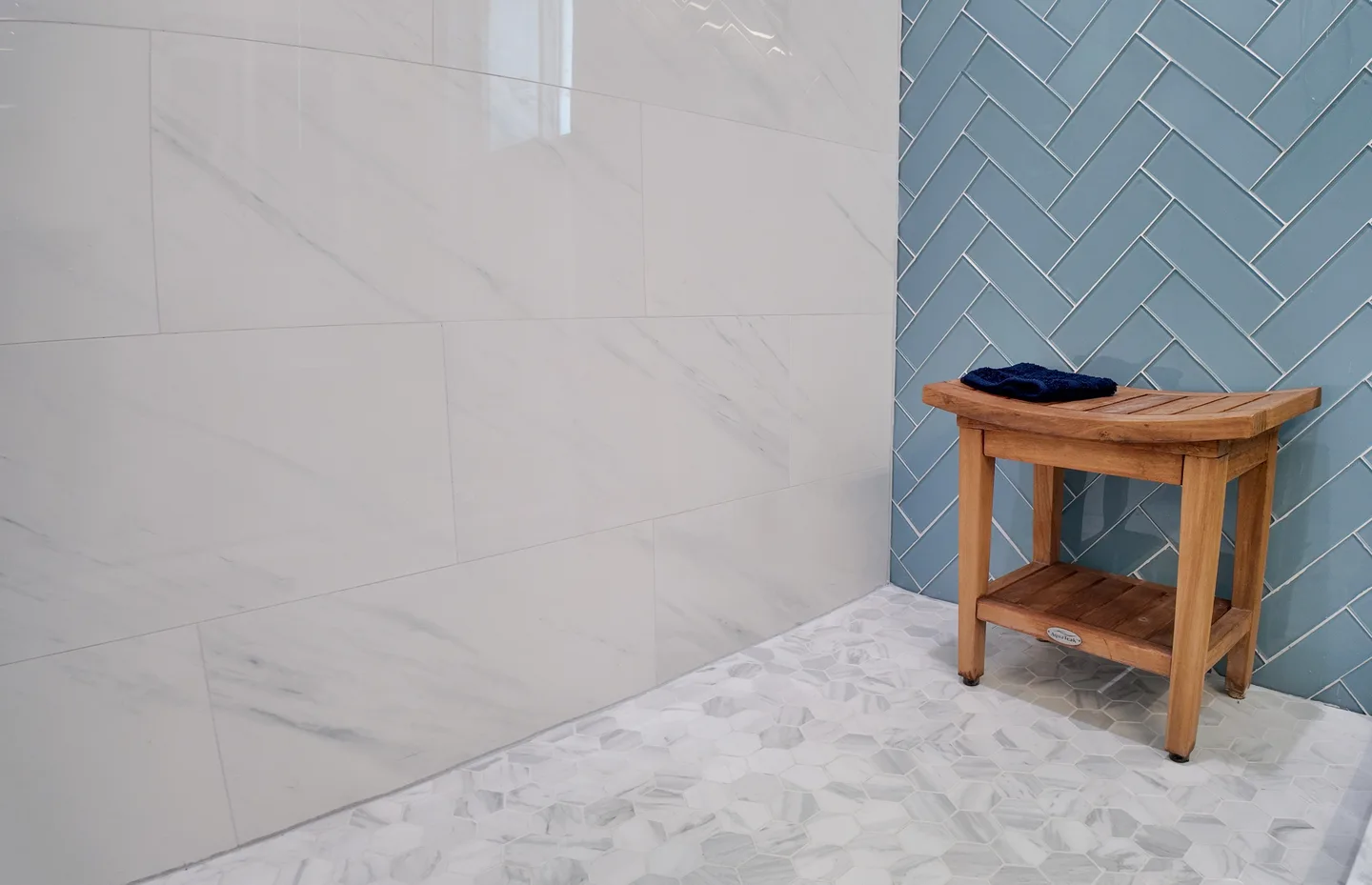
The cost of shower tile versus wall panels cannot be compared accurately using square-foot material prices alone. A low-cost ceramic tile can produce an expensive shower when the design involves detailed layout, numerous cuts and extensive labor, while a premium solid-surface or porcelain panel can cost more than a straightforward tile installation. Tile-shower pricing is affected by demolition, substrate replacement, waterproofing method, tile material and dimensions, pattern complexity, wall flatness, niches, benches, edge trim, grout type, plumbing penetrations and shower size. Small tiles create more pieces and grout joints, while very large tiles may reduce grout lines but require exceptionally flat walls and specialized cutting.
Panel-system pricing is affected by panel material, standard versus custom sizes, freight, wall preparation, out-of-square conditions, on-site cutting, plumbing openings, corner and seam treatments, custom niches, a matching base, glass coordination and the number of installers needed for handling. For a standard-size shower, an economical acrylic or composite system is often less expensive to install than a custom tiled shower. However, premium panels may cost more than midrange tile, correcting uneven walls adds labor to either system, and hidden water damage can affect both. Ask for estimates that show the complete installed scope, not only the finish-material allowance.
Installation time and installing over existing tile
Wall panels can generally be installed faster because large sections cover the wall with fewer individual pieces. A tile shower requires several separate operations: preparing the substrate, installing waterproofing, completing required testing, planning the layout, cutting and setting tile, allowing materials to cure, grouting, installing flexible sealants and coordinating glass measurements. Panels may reduce the setting and grouting stages, but the walls still need proper preparation, and installation should not be rushed over damaged framing, wet materials or unsuitable substrates. A quick installation is valuable only when the concealed work is done correctly.
Some manufacturers permit certain panels to be installed over existing tile when specific requirements are met, but that does not mean panels should hide an old shower problem. Before covering existing tile, determine whether the old tile is firmly bonded, whether the wall is flat enough, whether water damage is present, whether the shower pan is sound, whether plumbing changes are required, how the new system connects to the base, whether the added thickness affects valves and trim, and whether the manufacturer approves the application. If the existing shower leaks, covering it with panels may hide the evidence without correcting the cause.
Cleaning and mold
Wall panels generally require less detailed cleaning because they have fewer joints, though a panel shower may still have vertical corner seams, bottom sealant, valve and showerhead penetrations, shelf connections and glass-to-wall transitions that should be inspected and maintained. Use only cleaning products approved by the manufacturer, because abrasive pads or strong chemicals can dull, scratch or discolor certain acrylic, fiberglass and composite surfaces. Tile maintenance depends on the material and grout: many glazed ceramic and porcelain tiles clean easily, cement-based grout can absorb moisture and stains, high-performance or epoxy grouts can improve resistance without replacing the waterproofing membrane, and natural stone may need stone-specific cleaners and periodic sealing.
Panels are not mold-proof. Mold requires moisture and a suitable surface, so it can develop on soap residue, sealant or accumulated material even when the underlying panel is nonporous. Panels may reduce grout joints where residue collects, but they do not eliminate condensation, surface deposits, failed caulk, hidden plumbing leaks, poor ventilation or standing water. The EPA explains that moisture control is the key to controlling indoor mold, so address leaks, dry wet surfaces and improve ventilation when mold repeatedly appears. A shower material is not a substitute for proper exhaust ventilation and water management.
Repairability comparison
One benefit of tile is that a chipped or damaged piece may be replaceable without changing the entire wall, though removal can damage the membrane or substrate behind it, and a successful repair depends on matching tile, the location and original method, the substrate condition and protecting the waterproofing. Retain extra tile from the original installation, because colors and manufacturing lots change. Panel repair depends on the material and may include surface refinishing, color-matched repair, seam resealing, section replacement or full-panel replacement. Acrylic or fiberglass damage may remain visible after repair, some solid-surface materials can be renewed by trained fabricators, and printed panels can be hard to match if a pattern is discontinued, so ask about repair options and replacement availability before choosing.
Design flexibility, niches and accessories
Tile provides the widest design range, including ceramic, porcelain, glass, natural stone, mosaics and handmade tile in many sizes, layouts, patterns, accent walls and decorative borders, though that flexibility can also introduce visual clutter, since more materials and grout colors do not automatically create a better bathroom. Wall panels provide a more continuous appearance and may reproduce marble, concrete, stone, tile, solid colors or textured surfaces; premium panels can look sophisticated while low-quality printed panels may appear less convincing up close, so request a physical sample rather than selecting from an online image alone.
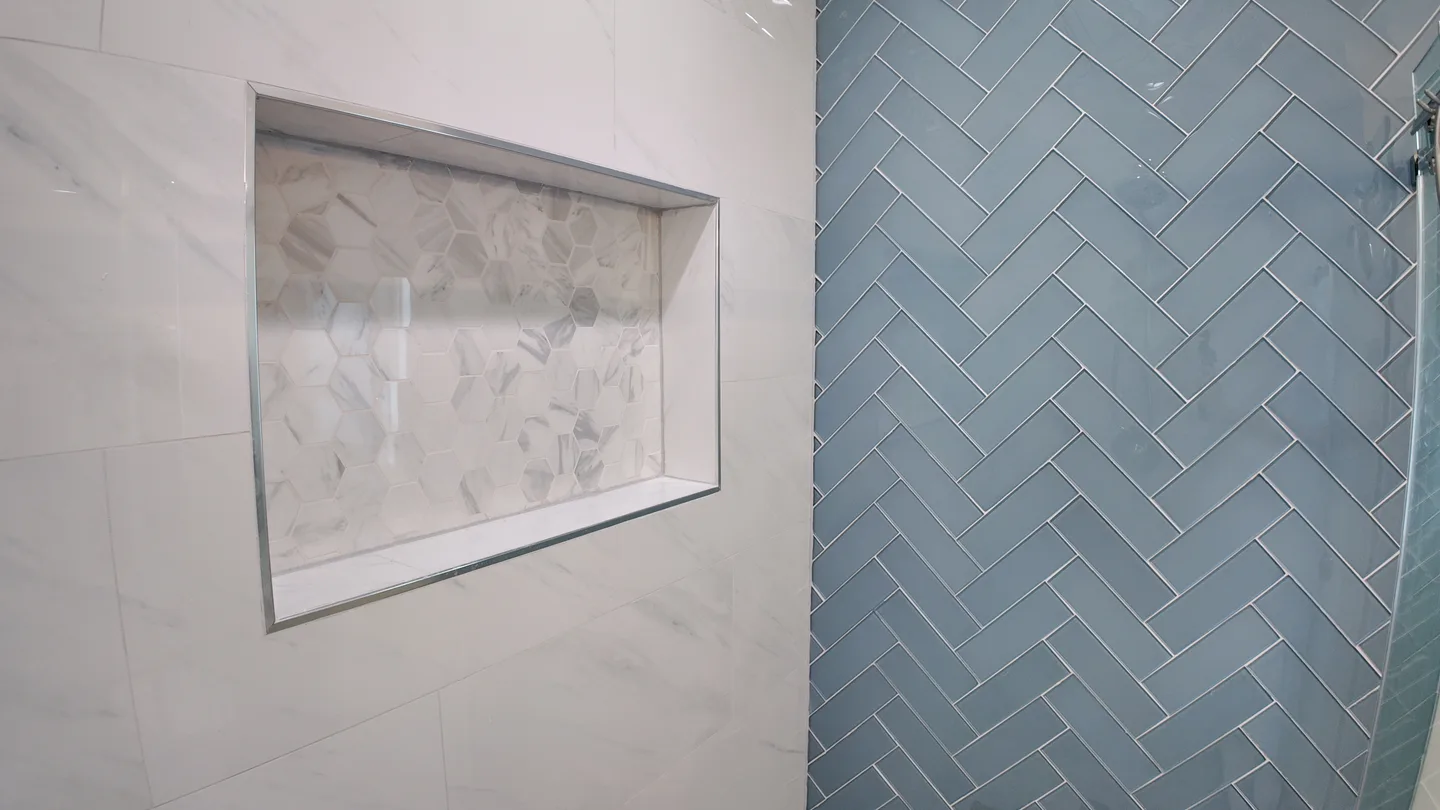
Tile allows custom niches and benches to be integrated into the design, each adding waterproofing transitions that must be detailed correctly. Panel systems may offer factory-made shelves, corner storage, applied niches and matching benches, but confirm accessories are approved for the system, because drilling through a panel after installation can create a water-entry point if the penetration is not reinforced and sealed. Grab bars should be secured to structural backing, not merely attached to the finish surface.
South Florida humidity and condo considerations
South Florida's climate does not automatically make panels better than tile; it makes moisture management more important for both. A successful shower should combine complete waterproofing, effective drainage, sealed penetrations, bathroom exhaust ventilation, air circulation, wet-area-approved materials, prompt leak repair and regular cleaning, and the exhaust fan should discharge to an approved exterior location rather than an attic or ceiling cavity. Panel surfaces may dry quickly because they have fewer joints, but tile also performs well when the waterproofing, grout, ventilation and cleaning plan are appropriate.
In a Miami condo, panels may reduce installation time and construction debris and can be easier to transport than large stone slabs. Before selecting a system, confirm elevator and doorway clearances, panel dimensions, delivery rules, association approval, contractor insurance, work-hour restrictions, plumbing changes, waterproofing requirements, required inspections and debris-removal procedures. A panel that cannot fit the elevator or turn through the hallway may need to be fabricated in smaller sections, creating additional seams, and large porcelain panels require careful handling because damage can occur before installation.
Do you need a permit?
Replacing only a surface finish may be treated differently from a full shower remodel. Once the work affects plumbing, drainage, electrical components, walls or regulated construction assemblies, permits and inspections may be required. Miami-Dade County requires appropriate permits for regulated plumbing, electrical, mechanical and building alterations, and properties within incorporated cities are handled by their municipal building departments, so confirm requirements for the property's exact location and scope before demolition.
Resale value: does tile add more than panels?
Buyers often associate custom tile with a premium bathroom, but tile does not guarantee a higher resale value. A poorly aligned layout, stained grout or a leaking shower can reduce buyer confidence, while a well-installed premium panel system may be more attractive than damaged or outdated tile. Resale perception depends on the home price range, neighborhood expectations, whether it is a primary or secondary bathroom, panel and tile quality, design consistency, workmanship, maintenance condition and the age of the renovation. In a luxury primary bathroom, custom tile or large-format porcelain may better match buyer expectations, while in a guest bathroom, rental or age-friendly renovation a grout-minimized panel system may be more practical.
Decision matrix
| Your priority | Usually the better option |
|---|---|
| Maximum customization | Tile |
| Minimal grout cleaning | Panels |
| Fast installation | Standard panel system |
| Handmade or decorative design | Tile |
| Rental-property maintenance | Panels |
| Matching an existing tiled bathroom | Tile |
| Replacing individual damaged areas | Tile, if matching material is available |
| Smooth, continuous walls | Panels |
| Economical standard alcove | Acrylic or composite panels |
| Premium stone look with few joints | Solid surface or large-format porcelain |
Questions to ask before choosing
- What type of panel or tile is included, and is it approved for direct shower use?
- What waterproofing system will be installed, and is the substrate in the estimate?
- How will corners and plumbing penetrations be sealed, and how will the walls connect to the base?
- Does the system require proprietary adhesive or sealant, and what cleaning products are prohibited?
- Can a damaged section be repaired, and how long will replacement materials remain available?
- Will the panels fit through the building and bathroom doors, and is freight included?
- Are niches, shelves and grab-bar backing included, and will the shower be tested before completion?
- Is glass measurement scheduled after the finished walls are installed, and which permits apply?
Common myths
Tile and grout make a shower waterproof. Grout joints are not waterproof; the shower relies on an appropriate wet-area assembly behind the tile. Wall panels have no seams. Most installations have joints at corners, edges, plumbing openings or the base that must be sealed correctly. Panels cannot look high-end. Premium solid-surface and porcelain panels can look sophisticated, though quality varies. Tile always costs more. A standard panel kit may cost less than custom tile, but premium panels can exceed a straightforward ceramic or porcelain installation. Panels never grow mold. Residue and failed sealant can support surface growth, so moisture and ventilation still matter. Panels can safely cover any old shower. Existing leaks, loose tile and damaged substrates should be corrected before installing a new finish.
Frequently asked questions
Are shower wall panels better than tile?
Panels are better for reduced grout maintenance and faster installation. Tile is better for customization, material variety and detailed design.
Are shower panels cheaper than tile?
Standard acrylic and composite panels are often less expensive to install. Premium solid-surface and porcelain panels may cost as much as or more than tile.
How long do shower panels last?
Service life depends on the material, installation, use and maintenance. Review the manufacturer's warranty rather than relying on a general lifespan claim.
Do shower panels need waterproofing behind them?
Requirements depend on the specific tested panel system and local code. Follow the manufacturer's instructions for substrate, seams and transitions, and never assume the panel alone resolves every detail.
Can wall panels be installed over tile?
Some systems permit it when the tile is sound, dry and properly prepared. Do not cover a leaking or damaged shower without correcting the underlying problem.
Are shower panels easy to clean?
They usually have fewer joints than tile and can be easier to wipe down. Use nonabrasive cleaners approved by the manufacturer.
Does epoxy grout make tile maintenance-free?
No. It can improve stain and moisture resistance, but the tile, sealant, glass and drain still require cleaning and inspection.
Which option is better for a rental property?
A durable panel system may reduce grout-related maintenance and installation time. Evaluate product quality and repair availability before selecting.
Can grab bars be installed on shower panels?
Yes, when appropriate structural backing and compatible mounting details are provided. A grab bar should not rely only on the panel for support.
Which option is best for South Florida?
Either can perform well. Panels offer fewer grout joints, while tile offers more design flexibility. Waterproofing, ventilation and installation quality matter more than the finish category.
Plan your South Florida shower remodel
MIA Remodeling Contractors provides bathroom remodeling, shower replacement and tub-to-shower conversions, waterproofing, tile and panel installation across Miami-Dade, Broward and Palm Beach counties, comparing complete installed assemblies rather than material price alone.
Florida general-contractor license CGC1535875. Serving Miami-Dade, Broward and Palm Beach counties.