
Bathroom Remodeling / Resale Value
Walk-In Shower vs Bathtub: Which Adds More Home Value?
When a shower adds buyer appeal, when removing a tub can hurt resale, and which layout is safest for your home.
When comparing a walk-in shower and a bathtub for resale value, the most important question is not which fixture is more popular. It is whether the home will still meet the needs of its likely buyers after the renovation.
In a home with two or more full bathrooms, a spacious walk-in shower in the primary bathroom can improve everyday function and buyer appeal, especially when another bathroom keeps a bathtub. In a one-bathroom home, removing the only bathtub may reduce flexibility for families with young children, buyers who prefer soaking and households that use a tub for other purposes. The fixture alone does not determine value, because waterproofing, drainage, ventilation, accessibility, layout and workmanship can matter more than whether the bathroom has a tub or a shower.
For the broadest resale appeal, the strongest configuration is often a walk-in shower in the primary bathroom plus at least one bathtub or tub-shower combination in a secondary bathroom. If the home has only one bathroom, keeping a tub-shower combination usually preserves the widest buyer pool. If another tub remains, a walk-in shower can be a strong primary-bathroom upgrade.
Quick answer: shower or bathtub for resale?
| Home situation | Usually the better resale strategy |
|---|---|
| One-bedroom condo with one bathroom | Depends on the likely buyer; a shower may be practical, but removing the only tub narrows options |
| Single-family home with one full bathroom | Keep a bathtub or tub-shower combination |
| Home with two or more full bathrooms | Walk-in shower in the primary bathroom and a tub in a secondary bathroom |
| Retirement or age-targeted community | Low-threshold or curbless shower may add appeal |
| Family-oriented neighborhood | Retain at least one bathtub |
| Small primary bathroom | A walk-in shower may improve space and circulation |
| Large luxury primary suite | Separate walk-in shower and soaking tub, if space allows |
| Remodeling for long-term use | Prioritize the occupants' safety and daily needs over a resale rule |
The fixture-count rule
Before deciding whether to remove a bathtub, count the bathing fixtures throughout the entire home. If the home has only one bathtub, removing it deserves careful consideration: even if the new walk-in shower looks more modern, the property will no longer offer a tub to future buyers, which may matter to families bathing young children, buyers who prefer soaking, pet owners, multigenerational households and buyers who simply expect a tub in a full family bathroom. This does not mean a house without a tub cannot sell; it means the renovation may reduce the number of buyers who consider the bathroom suitable.
If the home has multiple bathrooms, the decision becomes easier, because a primary bathroom can usually be converted to a walk-in shower while a secondary or hall bathroom keeps a bathtub, giving adults the shower they use daily while preserving flexibility for children, guests and future buyers. In a small condo, buyer expectations may differ, and a well-designed shower may be more useful than a rarely used tub, though condo construction introduces structural, plumbing and association restrictions, so the decision should reflect both the likely buyer and what the building allows.
Does a walk-in shower add more value than a bathtub?
A walk-in shower can add more perceived value when it improves a dated, cramped or difficult-to-use primary bathroom, and buyers may respond well to a comfortable footprint, low or curbless entry, well-placed controls, a handheld shower, built-in storage, a bench, slip-resistant flooring, quality tile or panels, clear glass that passes light through the room, and effective drainage and ventilation. But there is no credible national rule stating that every walk-in shower adds a fixed percentage to a home's value. The National Association of Realtors' 2025 Remodeling Impact Report estimated that a complete bathroom renovation could recover roughly 50 percent of its project cost at resale, and that figure applies to the overall renovation, not specifically to replacing a bathtub with a shower.
Resale value depends on the home's price range, number of bathrooms, neighborhood buyer profile, quality of the existing bathroom, project cost, material selections, workmanship, whether the renovation solves or creates layout problems, local inventory and the time between the remodel and the sale. A renovation can increase marketability without returning every dollar spent.
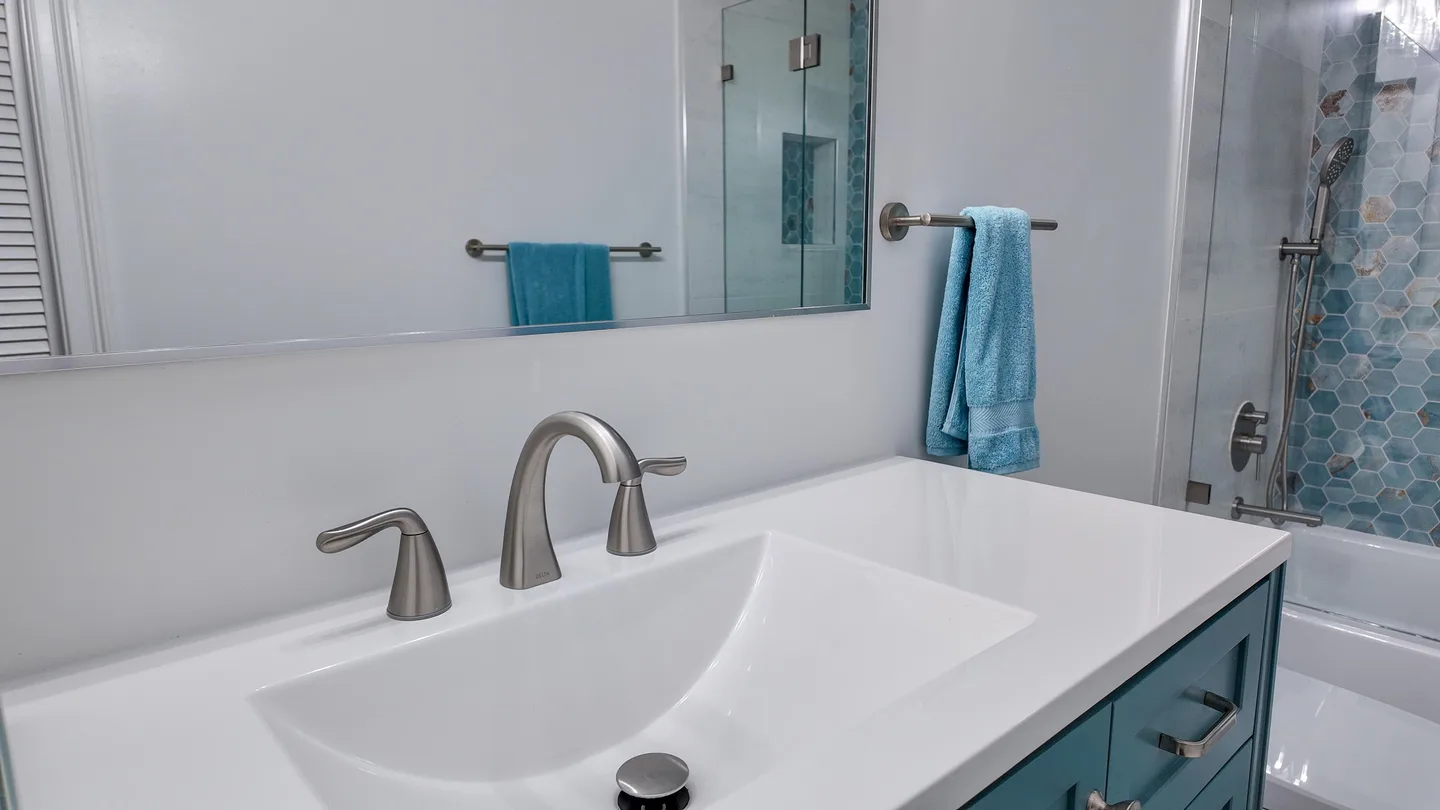
When each option wins
A walk-in shower is stronger when
- The existing bathtub is large but rarely used
- Another bathtub remains elsewhere in the home
- The existing tub is difficult to step into
- The bathroom feels visually crowded and clear glass would open it up
- Likely buyers prioritize aging in place
Keeping a bathtub is better when
- It is the only bathtub in the house
- The home is likely to attract families
- The tub is part of a well-proportioned primary suite with room for both
- The renovation is being done mainly for a near-term sale
- A clean tub-shower combination would have broader appeal
When a shower wins, the benefit usually comes from improving the entire layout, not simply swapping one fixture for another. Recovered space could support a wider shower, better circulation, a double vanity, more linen storage or a shower bench. A properly designed low-threshold shower can also make a bathroom easier to use, and the CDC recommends improving bathroom safety with measures such as grab bars inside and outside tubs or showers. A low-entry shower is not automatically accessible, though: entry height, floor slope, door width, controls, grab-bar backing and maneuvering space must be considered together.
Walk-in shower vs bathtub: buyer appeal
| Buyer type | Likely priority |
|---|---|
| Families with infants or young children | At least one bathtub |
| Older adults | Low entry, grab-bar support and seating options |
| Buyers with mobility limitations | Curbless or low-threshold shower with adequate clearances |
| Busy professionals | An easy-to-use primary shower |
| Luxury-home buyers | A spacious shower and, where room permits, a separate soaking tub |
| Condo buyers | Efficient layout and low-maintenance finishes |
| Pet owners | A tub, handheld shower or utility-washing area |
| Multigenerational households | A mix of bathing options |
These are tendencies, not guarantees. The right choice should reflect the home's layout and most likely buyer pool.
What actually creates bathroom value
A shower will not add meaningful value if it leaks, drains poorly or feels cramped, and a bathtub will not preserve value if it is damaged, hard to clean or surrounded by failing finishes. Waterproofing is more important than the fixture label: tile and grout are not the complete system, so a properly built shower needs an approved waterproofing assembly, correctly treated seams and corners, proper drain integration, a correctly prepared base and required testing, since small errors can cause concealed moisture damage, loose tile, staining and odors. Drainage must direct water to the drain without low spots, coordinating drain location, floor slope, shower size, tile format and threshold design, and large-format tile can be difficult to slope toward a center drain unless the layout and drain type are coordinated.
Ventilation matters because a larger tiled shower creates moisture that an appropriately sized exhaust fan must remove to an approved exterior location, or condensation, mildew, peeling paint and deteriorating caulk can follow. Shower size should be generous enough to enter safely, turn comfortably, reach the controls without standing under cold water, open the door without obstruction and keep water inside, so do not remove a tub only to build a narrow shower. Storage niches should be sized for the products the household uses and coordinated with framing and waterproofing, and cleaning and maintenance should balance appearance against upkeep, since clear glass shows deposits and textured tile can require more detailed cleaning.
Curbless vs standard walk-in shower
A standard walk-in shower typically uses a curb or low threshold to contain water, while a curbless shower creates a more continuous transition between the bathroom and shower floor. Curbless advantages include easier entry, cleaner visual lines, improved long-term usability, potential compatibility with mobility devices and less interruption in the floor plane. The challenges include more complex floor preparation, greater drainage-planning requirements, possible structural or slab modification, careful glass and splash control, increased waterproofing complexity and potential condo restrictions. A walk-in shower may still have a curb several inches high; a true curbless entry requires the shower floor to sit low enough for drainage slope without an elevated threshold, which in an existing home may require modifying the floor framing or concrete slab. Curbless construction should be planned before demolition, because adding it after plumbing and tile elevations are set can cause compromises or expensive rework.
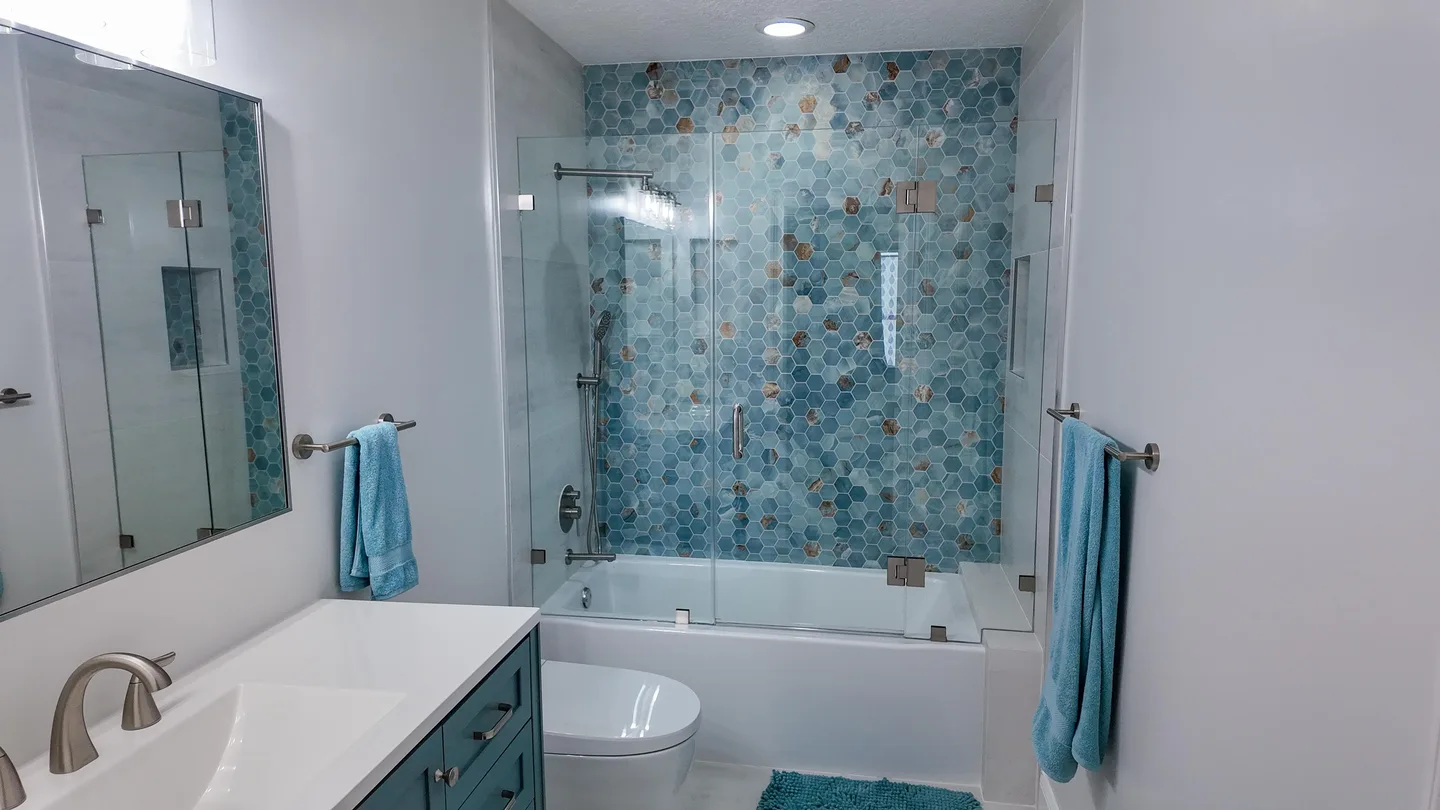
South Florida condos and permits
A tub-to-shower conversion in a condo may appear straightforward because the new shower can occupy the tub's footprint, but the work may still affect the building's plumbing, structure and waterproofing requirements. Before starting, confirm association approval and contractor-insurance requirements, permitted construction hours, plumbing-stack locations, drain size and location, concrete-slab restrictions and whether the slab is post-tensioned, waterproofing specifications, required flood testing, debris-removal procedures, elevator and common-area protection and municipal permits. Never cut or core a concrete condo slab before verifying its structural system and receiving approvals, and relocating the drain may be significantly more complicated than keeping it near its current location.
A conversion that changes plumbing, drainage, valves, electrical components or building assemblies may require permits and inspections. Miami-Dade County requires appropriate permits for regulated plumbing, electrical and mechanical alterations, and properties within an incorporated city follow that municipality's procedures. Required approvals depend on the property location, demolition scope, plumbing and electrical changes, structural modifications, building type and condo association requirements, so confirm the rules for the exact property before construction begins.
Cost factors: walk-in shower vs bathtub
A reliable project price cannot be based on the fixture alone, because a prefabricated shower installed in an existing alcove is very different from a custom curbless shower with slab modification, linear drainage, full-height tile and frameless glass. Major cost factors include the demolition scope, hidden water damage, plumbing relocation, drain replacement, shower-valve upgrades, slab or framing modification, waterproofing system, tile material and pattern, custom glass, bench construction, niches and shelves, grab-bar backing, lighting, exhaust ventilation, permit and design requirements and condo protection rules. Keeping the new drain and plumbing close to their existing positions can reduce complexity, while relocating fixtures may require more demolition, piping and restoration. For a broader breakdown, see our walk-in shower cost guide.
Resale-smart bathroom strategies
Keep the family tub
Install a walk-in shower in the primary bathroom while keeping a tub-shower combination in the hall or children's bathroom. This usually offers the broadest functionality.
Improve the existing tub-shower
In a one-bathroom home, keep the tub but update waterproof wall finishes, the shower valve, a handheld shower, storage niche, glass, lighting, ventilation and grab-bar backing.
Create a low-threshold shower
For long-term occupancy or accessibility-focused buyers, a larger low-threshold shower may add more daily value than an unused tub. Add structural backing so grab bars can be installed now or later.
Include both only when the room supports it
A separate shower and tub can work in a spacious primary suite, but do not reduce circulation, vanity storage or shower comfort just to fit both.
Ask a local real-estate professional
Before removing the home's only tub for resale, ask an experienced local agent what buyers expect in comparable nearby properties, which can differ by neighborhood and price point.
Mistakes that can reduce the renovation's value
- Removing the only tub without studying the buyer pool
- Calling any low-curb shower accessible, when entry, width, controls, seating, traction, reinforcement and maneuvering space all matter
- Using appearance as the only material criterion, ignoring slip resistance and cleaning
- Skipping wall reinforcement, which is easier to add while walls are open than after tile is set
- Moving the drain without investigating joists, slabs or condo structure
- Using too little glass or inadequate splash control on a doorless shower
- Ignoring the bathroom exhaust system
- Spending beyond the home's market position on premium stone and complex patterns
Questions to ask before removing a bathtub
- Is this the only bathtub in the home, and who is the likely future buyer?
- Will the new shower improve the overall layout, and can the existing drain stay in place?
- Is a curbless entry structurally feasible, and does the condo association allow the work?
- Which permits and inspections are required, and what waterproofing system will be used?
- Will the shower be flood-tested, and is the floor tile appropriate for a wet area?
- Will blocking be installed for future grab bars, and can the controls be reached before entering the water?
- Is there room for a bench or handheld shower, and how will water be contained?
- Does the exhaust fan adequately serve the renovated bathroom, and does the cost make sense for the home's value and sale timeline?
Frequently asked questions
Does removing a bathtub reduce home value?
It can reduce buyer appeal when it removes the only bathtub in the home. In a multi-bathroom property where another tub remains, converting the primary tub to a walk-in shower is generally less risky.
Do buyers prefer a bathtub or walk-in shower?
Preferences vary. Many adults prefer a spacious shower for daily use, while households with young children often want at least one bathtub. Offering both in different bathrooms serves the widest group.
Does a walk-in shower increase home value?
A well-designed shower can improve marketability and perceived value, particularly in a primary bathroom. There is no guaranteed percentage increase, and the result depends on cost, workmanship and the local market.
Should I replace my only tub with a shower?
If resale is a major priority, think carefully before removing the only bathtub. An updated tub-shower combination may preserve more flexibility, though for long-term personal use a shower may still be better.
Is a walk-in shower good for older adults?
A low-threshold shower can be easier to enter than a bathtub, and safety also depends on slip-resistant flooring, grab-bar support, lighting, controls, seating and maneuvering space.
Is a curbless shower the same as a walk-in shower?
No. A walk-in shower may still have a curb. A curbless shower has little or no raised transition and requires more detailed drainage and waterproofing design.
Can a bathtub drain be used for a walk-in shower?
Sometimes, but the existing drain size, location, condition and code requirements must be evaluated. A conversion may require drain or piping changes.
Does a tub-to-shower conversion require a permit in Florida?
Permit requirements depend on the scope and jurisdiction. Plumbing, electrical or structural changes commonly require permits. Check with the city or county responsible for the property.
Is a doorless walk-in shower a good resale feature?
It can create an open appearance, but it must be large enough to control splashing and drafts. A poorly proportioned doorless shower may be less comfortable than a properly enclosed design.
Is it better to install a shower and a separate bathtub?
It can be attractive in a sufficiently large primary bathroom. In a smaller room, fitting both may reduce shower size, storage and circulation, so good proportions matter more than fixture count.
Plan your tub-to-shower conversion in South Florida
MIA Remodeling Contractors provides bathroom remodeling and tub-to-shower conversions across Miami-Dade, Broward and Palm Beach counties, evaluating plumbing, waterproofing, structural, condo and permitting considerations before demolition begins.
Florida general-contractor license CGC1535875. Serving Miami-Dade, Broward and Palm Beach counties.