
Kitchen Cabinets / Buyer's Guide
Cabinet Refacing vs Replacement: Which Is Worth It?
Cost, durability, layout, cabinet condition and disruption compared, so you know when refacing is worth it and when to replace.
Cabinet refacing can transform a kitchen for less money and disruption than complete cabinet replacement, but only when the existing cabinet boxes, layout and countertop arrangement are worth keeping.
If the cabinet boxes are strong, properly installed and free from water or pest damage, refacing may provide an attractive cosmetic update. If the kitchen has structural problems, poor storage, an inefficient layout or cabinets damaged by moisture, replacement is usually the better long-term investment. The decision should begin with an inspection of the existing cabinets, not a comparison of door colors.
Reface cabinets when the boxes and layout are in good condition and appearance is the main problem. Replace cabinets when you need structural improvements, better storage, different dimensions, a new layout or correction of existing damage.
Can your cabinets be refaced?
Use this preliminary checklist before requesting prices.
Refacing may be appropriate when
- Cabinet boxes are securely attached
- Shelves and bottoms are not sagging
- Box corners and joints remain tight
- There is no active plumbing leak
- Sink-base panels are not swollen
- Cabinet interiors are largely undamaged
- The current layout works
- Counter heights are acceptable
- Appliance openings fit the planned appliances
- Existing storage is adequate
- The countertop will remain and you only want a new exterior style
Replacement is more appropriate when
- Boxes are separating or deteriorated
- Water has swollen cabinet panels
- Mold or persistent odor is present
- Termite or other pest damage is visible
- Wall cabinets are inadequately secured
- Drawers are too narrow or poorly configured
- The kitchen lacks functional storage
- Appliances are being relocated
- The island needs a different size or position
- Counter height or accessibility must change
- Walls, plumbing or electrical systems are moving
If several replacement conditions apply, investing heavily in refacing can delay rather than solve the underlying problem.
Refacing, refinishing, painting and replacement are different
These terms are frequently used incorrectly. Confirm the proposed scope before comparing estimates.
Cabinet painting
Painting normally keeps the existing boxes, doors and drawer fronts. Surfaces are cleaned, prepared, primed and painted. Painting changes color but does not change the door style or cabinet structure.
Cabinet refinishing
Refinishing generally means removing or abrading an existing finish and applying a new stain, clear coat or paint system. It is most suitable for wood components that are structurally sound and compatible with the new finish.
Cabinet refacing
Professional refacing normally keeps the existing boxes while removing old doors and drawer fronts; installing new doors and drawer fronts; covering visible face frames and box exteriors; adding matching finished end panels or veneer; replacing hinges; installing new pulls or knobs; and making final adjustments. Drawer boxes, cabinet interiors and the overall layout generally remain unless specifically included.
Cabinet replacement
Replacement removes the existing cabinets and installs new boxes, doors, drawers, panels and trim. This allows the project to change cabinet dimensions, layout, counter height, drawer configuration, pantry storage, appliance placement, island size, corner design, interior organization, materials, accessibility, and countertops and backsplash. Replacement is a construction project; refacing is primarily an exterior transformation.
Cabinet refacing vs replacement comparison
| Decision factor | Cabinet refacing | Cabinet replacement |
|---|---|---|
| Existing boxes | Remain in place | Removed |
| Doors and drawer fronts | Replaced | Replaced with complete system |
| Cabinet interiors | Usually remain | New |
| Layout changes | Very limited | Extensive |
| Storage improvement | Limited accessories possible | Full redesign possible |
| Structural improvement | Minimal | Complete |
| Countertop | Often remains | Frequently replaced |
| Backsplash | Can often remain | May be affected |
| Plumbing impact | Usually limited | Depends on layout |
| Electrical impact | Usually limited | May require changes |
| Project disruption | Lower | Higher |
| Waste | Less | More |
| Cost | Usually lower | Usually higher |
| Best use | Sound boxes and acceptable layout | Damage, poor layout or full remodel |
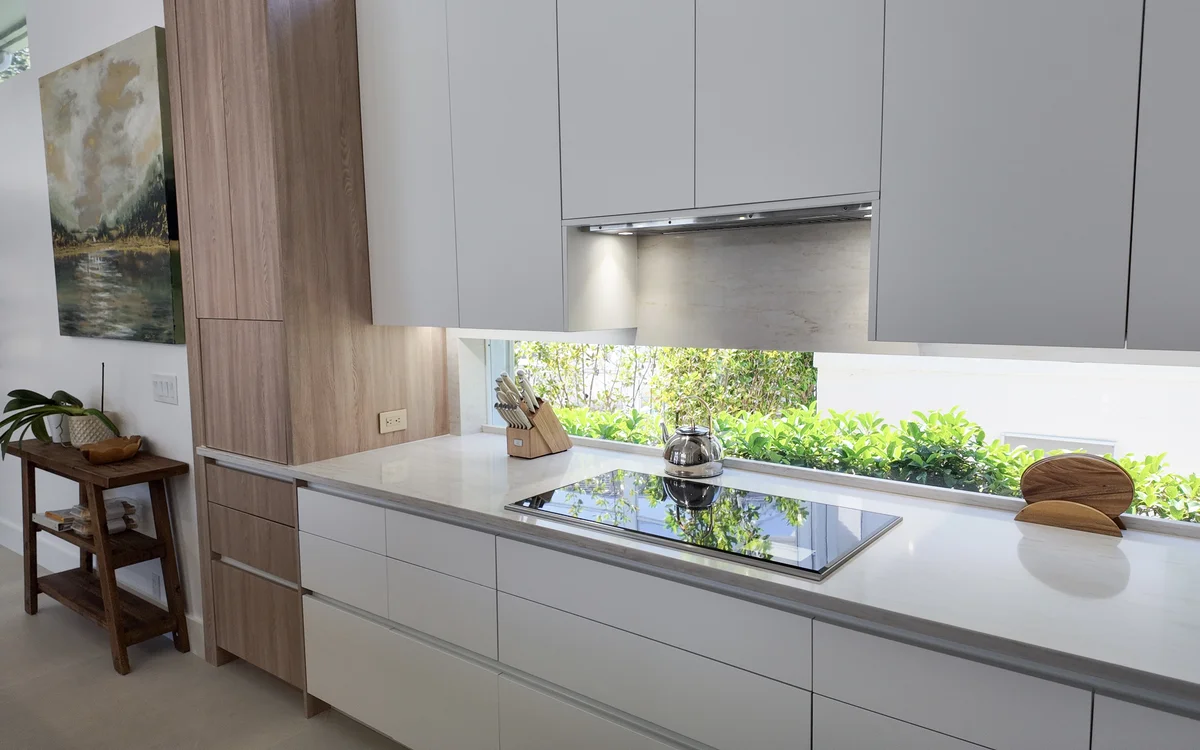
What refacing can and cannot fix
Refacing can improve
- Dated door styles
- Worn exterior finishes
- Unwanted cabinet colors
- Exposed face frames
- Visible cabinet ends
- Outdated pulls and knobs
- Hinges that no longer close smoothly
- Inconsistent exterior appearance
Refacing cannot fix
- Swollen cabinet bottoms and weak backs
- Sagging shelves
- Poor wall attachment
- Termite damage or mold
- Plumbing leaks
- Inadequate cabinet depth
- Poor traffic flow and insufficient drawers
- Bad corner storage or an undersized island
- Appliance-clearance problems
- Uneven installation and inaccessible storage
New doors can hide worn boxes from view, but they cannot make those boxes structurally new.
Inspect the cabinet boxes first
A qualified evaluation should include more than looking at the doors.
Sink-base cabinet
The sink base is often the most important inspection area. Check for swollen bottom panels, discolored corners, delaminated surfaces, soft material around plumbing penetrations, active or previous leaks, musty odors, mold-like growth, corroded fasteners and insect damage. Minor localized repairs may be possible, but widespread moisture damage usually makes replacement more sensible.
Dishwasher area
Inspect adjacent cabinet sides and floor areas for leaks, steam damage and delamination, and confirm that the dishwasher opening fits the planned appliance.
Cabinet backs, shelves and drawers
Cabinet backs help keep boxes square; thin, separated or damaged backs may not support a costly refacing project. Review shelf sagging, drawer-box condition, slide performance and interior dimensions. New drawer fronts will not improve a failing drawer box unless replacement is included.
Wall-cabinet attachment
Wall cabinets must be securely fastened to appropriate framing or support. Refacing should not proceed when cabinets are loose, separating or inadequately mounted.
Cost of cabinet refacing vs replacement
Cabinet prices depend on kitchen size, materials, door style, hardware, installation and location. Current national cost guides place professional refacing at approximately $100 to $455 per linear foot, with full-kitchen projects often landing in the mid-thousands. Replacement pricing varies much more widely because homeowners can choose stock, semi-custom or fully custom cabinetry. These figures are planning references, not guaranteed South Florida prices.
Refacing cost factors
- Number of doors and drawer fronts
- Door material and style
- Veneer or laminate material
- Finished end panels
- Crown molding and light rails
- Hardware and soft-close hinges
- Drawer-slide upgrades
- Surface preparation and box repairs
- Island panels, glass doors, removal and disposal
Replacement cost factors
- Cabinet category and box construction
- Door material and finish
- Hardware and storage accessories
- Finished panels and moldings
- Delivery, installation, demolition, disposal
- Countertops and backsplash work
- Plumbing and electrical work
- Flooring and wall repairs
- Permits when required
Do not compare a refacing proposal against a replacement price that includes unrelated remodeling work. Separate the cost into cabinet work, associated construction and optional upgrades. If refacing requires extensive box repairs, new drawers, many accessories and premium doors, its price may approach a basic replacement without delivering a new layout or structure.
When refacing is worth it
Refacing provides the most value when five conditions are true: the boxes are structurally sound enough to support new doors, panels, hardware and existing countertops; the layout already works for daily use; you are keeping attractive, serviceable countertops; the cabinet interiors are acceptable; and the exterior appearance, such as color, door style or visible wear, is the main problem.
When replacement is worth it
Replacement is normally the better investment when the kitchen needs more than a cosmetic change: a new layout that refacing cannot create, cabinets with water damage, poor storage that new drawers and pantry cabinets would solve, changing appliances that require new dimensions, countertops already being removed, low-quality boxes not worth premium doors, or accessibility that must improve through new counter heights and pull-outs.
The countertop question
Existing countertops often determine whether refacing makes financial sense. Refacing generally allows the countertop to stay in place, which is beneficial when the stone, quartz or other surface remains attractive and correctly installed; the contractor should still evaluate countertop support, existing overhangs, sink condition, backsplash transitions, appliance clearances, cabinet leveling and areas requiring new finished panels.
Removing cabinets while preserving granite, quartz or marble countertops can be risky, because they may crack during removal due to seams, adhesives, cutouts or insufficient access. Clarify in writing whether removal is included, who accepts breakage risk, where the countertop will be stored, whether sink removal is included, whether replacement is included if the slab breaks, and whether new cabinets match the old footprint.
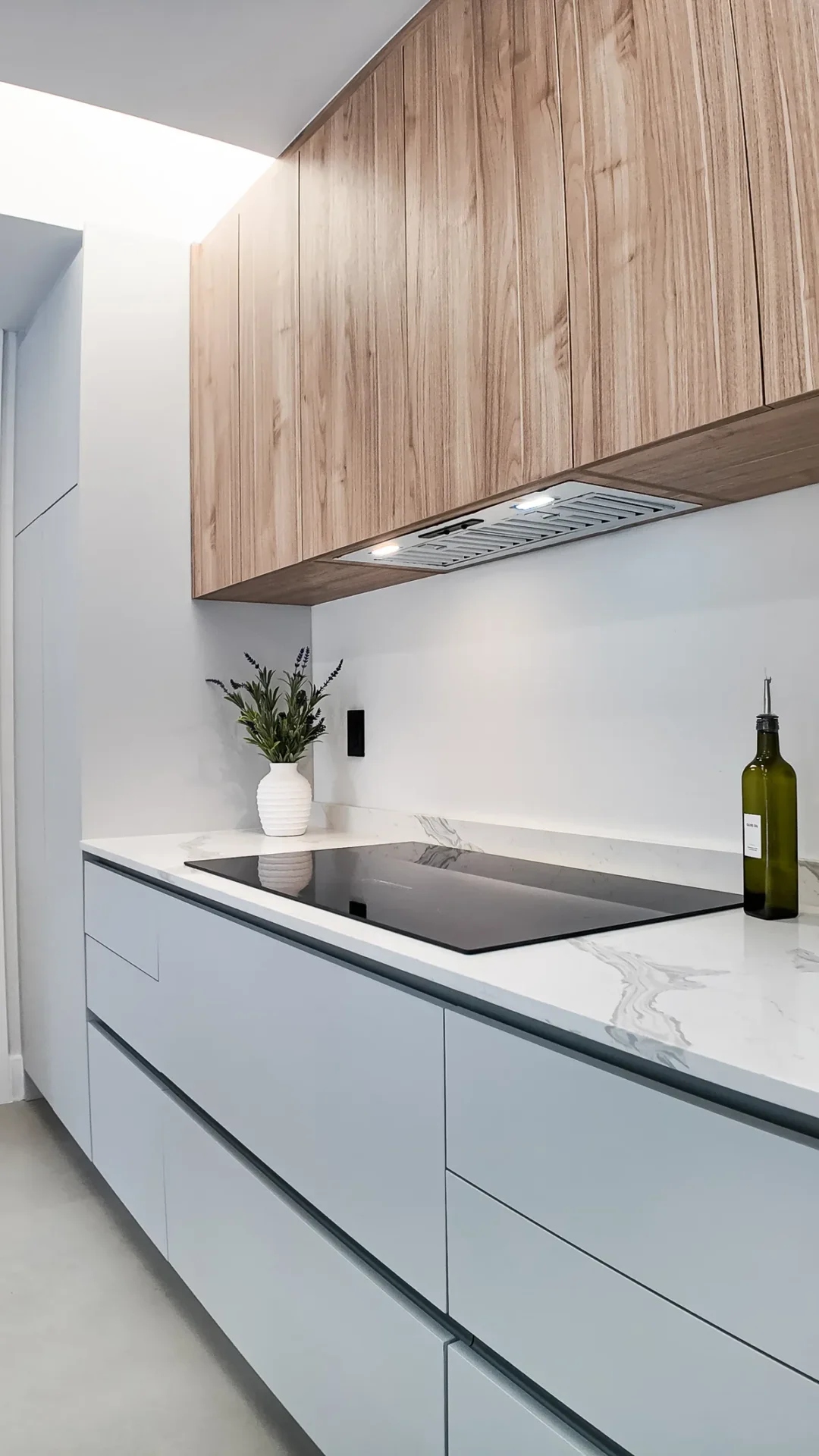
Can storage be improved during refacing?
Refacing can support limited functional upgrades when the boxes are sound, including new hinges, new drawer slides, roll-out shelves, pull-out trash units, tray dividers, lazy Susan replacements, interior organizers, new drawer boxes and under-cabinet lighting. Each accessory must fit the existing box dimensions. Refacing cannot make a narrow cabinet physically wider or turn an inefficient base cabinet into a bank of wide drawers without more extensive reconstruction.
Refacing materials
Wood veneer provides natural grain and can coordinate with wood doors, but requires careful surface preparation and edge finishing. Laminate can create a consistent, durable exterior in solid colors or wood-inspired patterns, with quality and edge treatment varying by product. Rigid thermofoil uses a vinyl layer formed over an MDF component for a smooth appearance but must be evaluated around heat-producing appliances. Painted finishes can be applied to suitable surfaces or new doors when preparation and finish-system compatibility are correct.
Ask for a physical sample showing the proposed door, face-frame treatment, end panel, edge detail, color, sheen and hardware. A door sample alone does not show how the completed refacing system will look.
Durability of refaced cabinets
Refacing can last when cabinet boxes remain stable, surfaces are properly cleaned and prepared, adhesives match the substrate, veneer edges are finished correctly, water exposure is controlled, new hinges are installed accurately, doors are adjusted and manufacturer instructions are followed. Premature problems may include peeling veneer, visible seams, edge lifting, misaligned doors, finish mismatch, damage around sinks or dishwashers, and old drawer systems failing after exterior work is completed. Request separate warranties for materials and workmanship.
South Florida considerations
Moisture and plumbing leaks: South Florida humidity does not automatically make cabinets unsuitable for refacing; direct water exposure is the more immediate concern. Inspect cabinets around sinks, dishwashers, refrigerators, ice makers, exterior walls and plumbing penetrations, and do not cover moisture damage until the source has been identified and repaired.
Air conditioning: interior cabinet materials and adhesives are generally intended for conditioned spaces, so a vacant or seasonal residence should maintain reasonable indoor temperature and moisture control. Pest damage: inspect older wood cabinets for termite or other pest damage before approving refacing, and never conceal an unresolved infestation.
Condominium rules: refacing is attractive in condos because it usually creates less demolition and debris, but the building may still require contractor insurance, management approval, work-hour compliance, elevator protection, debris-removal procedures, plumbing-shutdown coordination and noise restrictions.
Permits in Miami-Dade: for residential units under Miami-Dade County jurisdiction, replacing kitchen cabinets in the same configuration is listed as an item that does not require a building permit, while associated plumbing, ventilation or electrical work requires permits when those systems are relocated, reconfigured or altered. Incorporated cities may administer their own requirements. See our Miami condo renovation permit guide for related work.
Lead-safe work in older homes: cabinet refacing, refinishing or replacement may disturb painted surfaces. The EPA's Renovation, Repair and Painting Rule applies to paid renovation work that disturbs painted surfaces in most pre-1978 housing and child-occupied facilities, and covered contractors must be certified and use lead-safe work practices unless an applicable exemption applies. A contractor should not assume old coatings are lead-free based only on appearance.
Project disruption and timeline
Refacing is usually faster because the cabinet boxes remain installed. Replacement requires demolition, wall preparation, new cabinet installation and frequently countertop work.
Typical refacing sequence
- Inspect and measure existing cabinets
- Select doors, fronts and exterior material
- Order components
- Remove doors and hardware
- Prepare exposed surfaces
- Apply veneer, laminate or finish
- Install new doors and drawer fronts
- Install hardware, adjust and touch up
Typical replacement sequence
- Complete the new layout
- Select and order cabinets
- Confirm appliances and utilities
- Obtain required approvals
- Protect the area; remove countertops and cabinets
- Complete wall, plumbing and electrical work
- Install and level new cabinets
- Measure and install countertops, then backsplash and finishes
The kitchen may remain partially usable during some refacing projects, while replacement usually creates a longer period without normal kitchen access.
A hybrid approach
Some kitchens can combine refacing and selective replacement, such as refacing perimeter cabinets while replacing the island, refacing wall cabinets while installing new drawer bases, replacing a damaged sink cabinet, adding a new pantry cabinet, rebuilding the refrigerator surround or installing custom panels around new appliances. A hybrid plan requires careful coordination of door style, finish, cabinet depth, toe-kick height and countertop support. If too many boxes require replacement, a full cabinet system may provide a more consistent result.
Decision scorecard
Give one point for every statement that applies. The option with more points is likely the stronger starting point, and a physical inspection should confirm it.
Refacing points
- Existing boxes are structurally sound
- Current layout works well
- Countertops will remain
- Cabinet interiors are acceptable
- Appliance sizes will remain similar
- Exterior appearance is the primary concern
- Minimal disruption is important
- No widespread water damage exists
Replacement points
- Layout needs improvement
- Cabinets have water or pest damage
- Storage is inadequate
- Appliances are changing substantially
- Countertops are being replaced
- Cabinet interiors are poor
- Accessibility needs improvement
- Major plumbing or electrical work is planned
Questions to ask a refacing contractor
- Which existing components will remain?
- Will drawer boxes remain?
- What repairs are included?
- What exterior material will cover the boxes?
- How will surfaces be prepared?
- Which adhesive system will be used?
- Are doors and drawer fronts completely new?
- Are hinges included?
- Are drawer slides included?
- Are pulls or knobs included?
- How will finished ends be treated?
- Is crown molding included?
- How will sink-area damage be handled?
- What happens if hidden damage is discovered?
- Are material and labor warranties separate?
- Is touch-up service included?
- Are permit or HOA requirements applicable?
- Is lead-safe certification required?
- How many days will on-site work take?
- What is specifically excluded from the proposal?
Common myths
"Refacing means painting the cabinets."
False. Refacing normally includes new doors and drawer fronts plus a new exterior treatment over visible cabinet surfaces.
"Refacing makes cabinets structurally new."
False. The existing boxes remain.
"Refacing is always half the cost of replacement."
False. Savings depend on door count, materials, repairs and replacement-cabinet category.
"Any cabinet can be refaced."
False. Damaged, loose or deteriorated boxes may not provide a suitable foundation.
"Refacing improves the kitchen layout."
False. The existing cabinet positions and dimensions generally remain.
"Replacement always wastes the old cabinets."
False. Serviceable cabinets may be donated or reused in a garage or laundry room.
"New doors will fix bad storage."
False. Doors change access and appearance but do not increase box dimensions.
Final verdict
Choose cabinet refacing when the existing cabinet system deserves to be preserved. Choose cabinet replacement when the kitchen needs structural, functional or dimensional improvement. The least expensive initial option is not automatically the best value, because refacing damaged or poorly designed cabinets can spend a significant portion of a replacement budget without correcting the real problems.
Begin with a cabinet-box inspection, appliance plan and honest evaluation of the existing layout. Then compare detailed refacing and replacement scopes based on what each option will actually accomplish.
Frequently asked questions
Is cabinet refacing worth it?
Refacing is worth considering when cabinet boxes are sound, the layout works and the countertops will remain. It is less valuable when substantial structural or functional changes are needed.
Is it cheaper to reface or replace kitchen cabinets?
Refacing is usually cheaper than comparable replacement, but premium doors, extensive repairs and accessories can narrow the difference.
How long does cabinet refacing last?
Service life depends on box condition, surface preparation, materials, adhesives, water exposure and workmanship. Request written warranty terms rather than relying on a universal lifespan claim.
Can damaged cabinets be refaced?
Minor localized repairs may be possible. Widespread swelling, delamination, mold, pest damage or weak joints generally support replacement.
Can laminate cabinets be refaced?
Some can be if the boxes are stable and surfaces can accept the selected system. A contractor must inspect material compatibility.
Can cabinets be refaced without removing countertops?
Yes. Preserving existing countertops is one of refacing's primary advantages.
Does cabinet refacing include new drawers?
Usually not unless specifically stated. New drawer fronts are common, but existing drawer boxes may remain.
Can soft-close hinges be added during refacing?
Often, yes. Compatibility depends on the cabinet style, door type and mounting conditions.
Can the kitchen layout change during refacing?
Only minor additions or selective cabinet changes are usually practical. Major layout changes require replacement.
Does cabinet refacing increase home value?
A professional refacing project can improve appearance and buyer appeal when the underlying cabinets and layout remain functional. It cannot compensate for damaged boxes or a poor kitchen plan.
Do you need a permit to reface kitchen cabinets in Miami?
Cosmetic refacing without alterations to regulated systems may not require a building permit. Plumbing, electrical, ventilation or layout changes can trigger permits. Confirm with the applicable city or county.
Is cabinet painting better than refacing?
Painting costs less when the existing doors are suitable and only the color needs to change. Refacing is more appropriate when you also want a different door style.
Evaluate your cabinets with MIA Remodeling Contractors
MIA Remodeling Contractors helps South Florida homeowners evaluate existing kitchen cabinets, remodeling layouts, countertops, plumbing, electrical work and installation requirements. Our team can determine whether cabinet refacing provides genuine value or whether replacement will produce a stronger long-term result.
Florida general-contractor license CGC1535875. Serving Miami-Dade, Broward and Palm Beach counties.